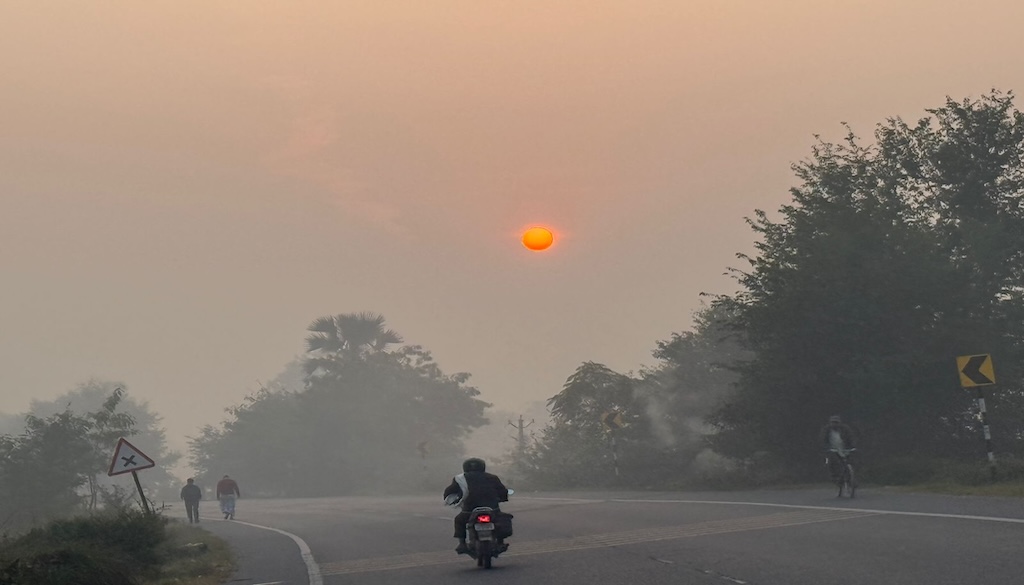
Winter Haze Drives Up Pollution in Bihar, with 19 Cities Affected
As winter settles in, air pollution levels have significantly worsened across Bihar, affecting 19 cities. On December 11, 2025, reports indicated that the air quality in many urban areas had deteriorated, with Patna City providing a rare exception by recording one of the lowest Air Quality Index (AQI) levels in the state.
Current Air Quality Status
According to data from the Central Pollution Control Board (CPCB), the most polluted area in Patna was Samnapura, which reported an AQI of 259, categorized as “poor.” In contrast, Shikarpur in Patna City recorded the lowest AQI in the state at 80, placing it in the “satisfactory” band. Other areas in Patna showed varying pollution levels:
- Danapur: AQI 238 (Poor)
- Taramandal: AQI 159 (Moderate)
- Muradpur: AQI 116 (Moderate)
- Rajvanshi Nagar: AQI 174 (Poor)
Widespread Air Quality Concerns
The overall air quality across the state has been described as “concerning” by authorities, who have warned of potential health impacts, especially for vulnerable populations. The following cities reported moderate to poor air quality:
- Araria
- Ara
- Aurangabad
- Begusarai
- Bettiah
- Bhagalpur
- Bihar Sharif
- Buxar
- Chhapra
- Gaya
- Hajipur
- Kishanganj
- Motihari
- Munger
- Muzaffarpur
- Rajgir
- Saharsa
- Sasaram
Specific AQI Levels in Key Cities
Here are the AQI levels recorded in some key cities in Bihar:
| City | AQI | Category |
|---|---|---|
| Munger | 194 | Very Poor |
| Rajgir | 188 | Poor |
| Buxar | 181 | Poor |
| Chhapra | 181 | Poor |
| Araria | 178 | Poor |
| Patna | 171 | Poor |
| Saharsa | 169 | Poor |
| Ara | 168 | Poor |
| Sasaram | 167 | Poor |
| Bihar Sharif | 139 | Moderate |
| Hajipur | 137 | Moderate |
| Gaya | 137 | Moderate |
| Bettiah | 136 | Moderate |
| Motihari | 135 | Moderate |
| Muzaffarpur | 130 | Moderate |
| Bhagalpur | 115 | Moderate |
| Kishanganj | 109 | Satisfactory |
| Aurangabad | 105 | Satisfactory |
| Begusarai | 104 | Satisfactory |
Causes of Increased Pollution
Environmental experts and officials have attributed the spike in pollution levels to several factors:
- Low winter temperatures that increase air density and trap pollutants close to the ground.
- The formation of haze, which is a mix of fog, particulate matter, and harmful gases.
- Dust carried by westerly winds.
- Emissions from construction activities.
Health Recommendations
Health officials have advised residents in affected areas to take precautions, including:
- Limiting outdoor activities, especially during early morning hours when pollutant accumulation is highest.
- Wearing masks to reduce inhalation of harmful particles.
- Staying informed about local air quality updates.
Conclusion
The worsening air quality