Supercomputer PARAM Rudra Unveiled at IIT-Patna in Bihar
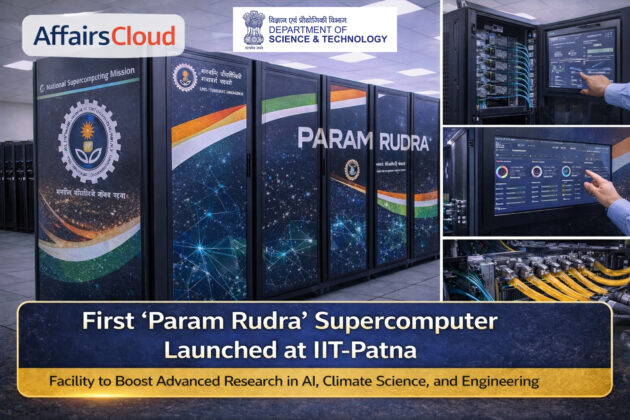
On December 26, 2025, the PARAM Rudra supercomputer, a state-of-the-art High-Performance Computing (HPC) system, was officially launched at the Indian Institute of Technology (IIT) Patna in Bihar. This event marks a significant milestone as it is the first PARAM Rudra supercomputer to be established in the state.
Launch Ceremony
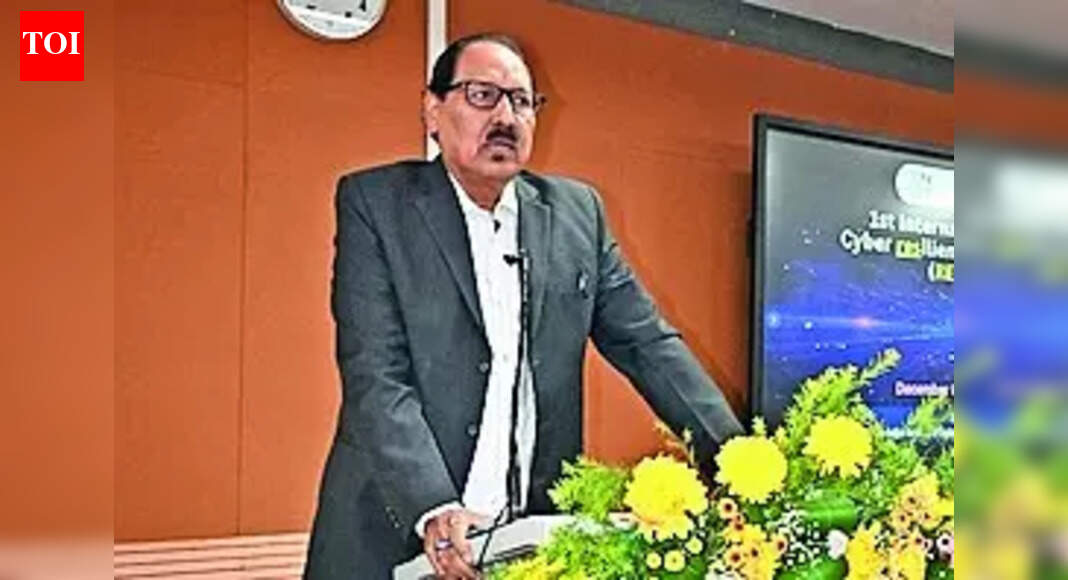
The launch ceremony was presided over by Amitesh Kumar Sinha, the Additional Secretary of the Ministry of Electronics and Information Technology (MeitY). The event highlighted the importance of advanced computing technology in enhancing research capabilities across various fields.
Significance of PARAM Rudra
PARAM Rudra is a crucial addition to India’s computing infrastructure and is part of the National Supercomputing Mission (NSM). The supercomputer is expected to significantly advance research capabilities for approximately 60 faculty members and 400 students across 10 different departments at IIT Patna.
Background of the Supercomputer
In May 2023, a Memorandum of Understanding (MoU) was signed between IIT Patna and the Centre for Development of Advanced Computing (C-DAC), under the aegis of MeitY, to facilitate the establishment of the PARAM Rudra supercomputer. This collaboration underscores the commitment to indigenous development and self-reliance in high-performance computing technology.
Technical Specifications
PARAM Rudra operates at an impressive computing capacity of 838 teraflops, utilizing components and software that are developed indigenously. This supercomputer is designed to support a wide range of advanced research areas, including:
- Computational Astrobiology & Astrochemistry
- Material Design & Molecular Electronics
- Computational Fluid Mechanics & Nano-Bio Research
- Artificial Intelligence (AI) and Data Science
- Quantum Computing
Features of PARAM Rudra
The PARAM Rudra supercomputer is equipped with cutting-edge technology, including:
- High-end Intel Xeon Central Processing Units (CPUs)
- NVIDIA A100 Graphics Processing Units (GPUs) for accelerated AI and machine learning tasks
- Large Random Access Memory (RAM) with parallel Lustre storage
- High-speed InfiniBand interconnects
- Petaflop-scale computing performance, capable of executing 1015 Floating Point Operations Per Second (FLOPS)
Previous Deployments of PARAM Supercomputers
Prior to the launch at IIT Patna, several PARAM supercomputers were deployed across India, including:
- Giant Metrewave Radio Telescope (GMRT), Pune, Maharashtra
- Inter University Accelerator Centre (IUAC), Delhi
- S. N. Bose National Centre for Basic Sciences, Kolkata, West Bengal
About the National Supercomputing Mission (NSM)
The National Supercomputing Mission is a flagship initiative of the Government of India, launched in 2015 with a total outlay of Rs. 4,500 crore. As of December 2025, a total of 37 supercomputers with a combined capacity of 39 petaFLOPS have been deployed across the country, supporting over 12,000 researchers in various fields.
Implementation of NSM
The mission is jointly implemented by the Ministry of Electronics and Information Technology (MeitY) and the Department of Science and Technology (DST), under the Ministry of Science and Technology (MoS&T). C-DAC and the Indian Institute of Science (IISc) in Bengaluru serve as the nodal implementing agencies.
Ministry of Electronics and Information Technology (MeitY)
The MeitY plays a crucial role in the development of electronic and information technology in India. The current Union Minister is Ashwini Vaishnaw, representing Odisha in the Rajya Sabha, while Jitin Prasada serves as the Minister of State, representing Pilibhit in Uttar Pradesh.
Conclusion
The unveiling of the PARAM Rudra supercomputer at IIT Patna is a significant step towards enhancing India’s research capabilities and fostering innovation in various scientific fields. With its advanced features and indigenous development, PARAM Rudra is set to play a vital role in supporting cutting-edge research and technological advancements in the country.
Note: The information presented in this article is based on the latest updates available as of December 2025.