IIT Indore’s New Device Generates Electricity from Evaporation
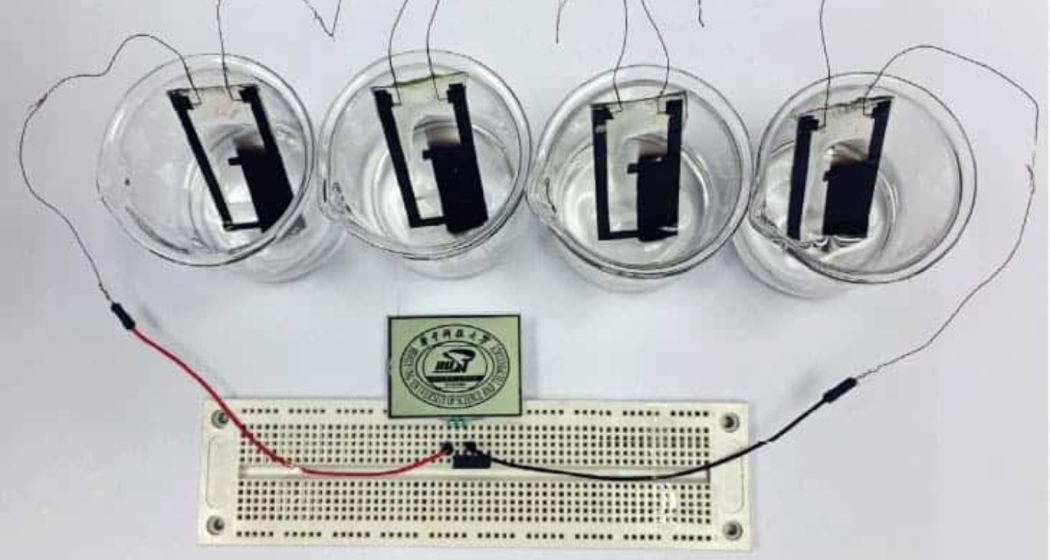
Researchers at the Indian Institute of Technology (IIT) Indore have made a significant breakthrough by developing a device that generates electricity using the natural process of evaporation. This innovative technology presents a low-cost, sustainable power source, particularly beneficial for rural and off-grid communities.
Overview of the Innovation
The evaporation-driven electricity generator was created in the Sustainable Energy and Environmental Materials (SEEM) Lab at IIT Indore. The project is led by Professor Dhirendra K. Rai, with research assistance from Khushwant Singh. The device operates without the need for sunlight, batteries, or moving parts, relying solely on water and air to generate power.
How It Works
At the heart of this device is a membrane made from graphene oxide combined with zinc-imidazole, a stabilizing compound. When the membrane is partially immersed in water, it channels the liquid upwards, facilitating evaporation. This movement of water molecules causes ions to separate at opposite ends of the membrane, generating a steady voltage.
Specifications
- A single membrane measures approximately 3 x 2 cm².
- It can produce up to 0.75 volts.
- Multiple membranes can be combined to increase the overall output.
- The system is effective with clean water, saline, or muddy sources, maintaining stability for months.
Significance of the Breakthrough
Professor Suhas Joshi, the Director of IIT Indore, emphasized the importance of this innovation as a reflection of the institute’s commitment to creating knowledge that benefits society. He stated, “This innovation is a testament to IIT Indore’s vision of creating knowledge that matters to society. By turning the simple phenomenon of water evaporation into a dependable power source, our researchers have opened new pathways for sustainable technologies.”
Potential Applications
The team envisions several practical applications for this technology, including:
- Powering sensors in agricultural fields and forests.
- Providing emergency lighting during power outages.
- Supporting low-power medical wearables in remote clinics.
Unlike solar panels, this device operates effectively indoors, at night, and even under cloudy conditions, making it suitable for a variety of challenging environments.
Future Developments
The researchers are currently working on reducing production costs by exploring the use of clay-based compounds and minerals, which would enable large-scale manufacturing of the device. They also envision future applications in energy-generating textiles and self-powered walls for indoor sensors.
Conclusion
This discovery highlights the potential of Indian scientific research to transform fundamental curiosity into technologies that address pressing societal challenges. By harnessing the power of evaporation, IIT Indore’s innovative device represents a significant step toward sustainable energy solutions that can improve the quality of life for individuals in rural and underserved communities.
Note: The information in this article is based on research conducted at IIT Indore and is intended to provide an overview of the new evaporation-driven electricity generator.