IIT Guwahati Develops Radiation-Resistant Cement Mortar
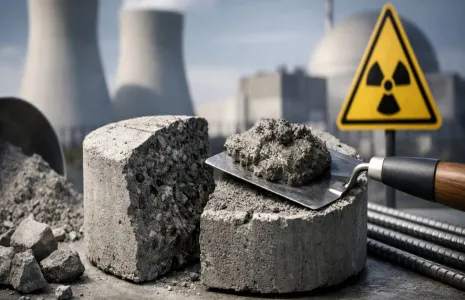
The Indian Institute of Technology Guwahati (IIT Guwahati) has made a significant advancement in construction materials by developing a new type of cement mortar that is both stronger and more effective at blocking harmful radiation. This innovative mortar is particularly designed for use in nuclear facilities, where safety and durability are paramount.
Overview of the Research
The research team at IIT Guwahati has created a modified cement mortar that serves dual purposes: it acts as a structural component and provides radiation shielding. The enhanced mortar increases density and durability, which helps to limit radiation penetration. This development is expected to significantly reduce the risk of radiation leakage and ensure the longevity of protective structures in nuclear environments.
Composition of the Radiation-Resistant Mortar
To achieve the desired properties, the research team incorporated four types of microparticles into the cement mortar:
- Boron Oxide
- Lead Oxide
- Bismuth Oxide
- Tungsten Oxide
These microparticles were added in small quantities to evaluate their impact on the compressive strength of the mortar after 28 days, as well as their effectiveness in shielding against mixed radiation fields, including gamma rays and neutrons.
Findings of the Study
The study highlighted distinct effects for each type of microparticle, revealing trade-offs between mechanical strength, workability, and radiation attenuation. Professor Hrishikesh Sharma, who leads the research at the Department of Civil Engineering at IIT Guwahati, emphasized that the safety of nuclear infrastructure heavily relies on the performance of containment materials under extreme mechanical and radiation conditions. The findings indicate that the incorporation of microparticles can enhance both structural integrity and radiation shielding capabilities.
Applications of the Research
This research provides a framework for developing cement-based materials suitable for various applications, including:
- Nuclear Power Plants
- Small Modular Reactors
- Medical Radiation Facilities
The enhanced mortar is designed to improve resistance to heat, structural loads, and radiation, making it a vital component for safe and effective nuclear infrastructure.
Future Directions
The research team plans to scale up the developed mortar to create a full concrete mix design. Future work will include:
- Conducting structural-level testing of reinforced concrete elements
- Optimizing microparticle dosage to achieve a balance between mechanical strength, workability, durability, and radiation shielding performance
Additionally, the team is actively seeking collaborations with nuclear energy agencies, material manufacturers, and infrastructure firms to conduct real-world testing and pilot applications. These collaborations aim to validate the performance of the new mortar under simulated field conditions, ultimately contributing to safer and more resilient nuclear infrastructure.
Publication and Collaboration
The findings of this research were published in the journal Materials and Structures. The study was co-authored by Professor Hrishikesh Sharma, research scholar Sanchit Saxena, and Dr. Suman Kumar from the CSIR-Central Building Research Institute in Roorkee. Their collaborative efforts have laid the groundwork for further advancements in cement-based materials for critical applications.
Conclusion
The development of radiation-resistant cement mortar by IIT Guwahati represents a significant step forward in the field of construction materials, particularly for nuclear facilities. By enhancing the safety and durability of these structures, this research not only addresses immediate concerns regarding radiation leakage but also supports the long-term resilience of nuclear infrastructure.
Note: The advancements in construction materials such as radiation-resistant cement mortar are crucial for ensuring the safety and efficiency of nuclear facilities, thereby contributing to the broader goals of energy security and public safety.