
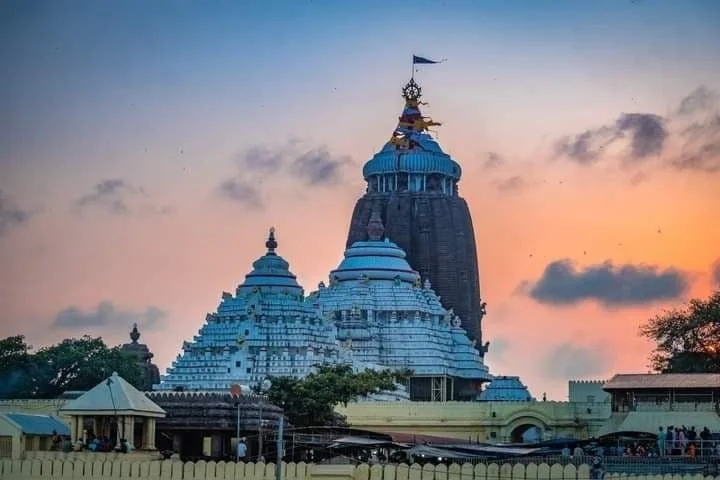
Hidden beneath Puri? IIT Gandhinagar survey flags possible tunnel from Shree Jagannath temple to the sea
A recent Ground Penetrating Radar (GPR) survey conducted by IIT Gandhinagar has revealed intriguing evidence of underground structures beneath Puri, including a potential tunnel extending from the Shree Jagannath Temple towards the sea. This discovery suggests that the temple town, long revered for its spiritual significance, may also hold layers of unexplored historical and archaeological wealth beneath its surface.
Background of the Survey
The survey was commissioned following the discovery of artefacts during excavation work for the Srimandir Parikrama Project. Among the most notable finds were lion sculptures believed to belong to the Ganga dynasty, a medieval ruling lineage known for its architectural patronage in the region. These discoveries raised serious questions about the extent of buried heritage around the temple complex, prompting authorities to opt for scientific mapping using GPR technology to avoid further damage.
Key Findings of the GPR Survey
According to the survey results, structural remains were detected across an area of approximately 21.6 square metres, with up to 43 potential heritage sites identified at various locations across Puri. These sites include:
- Emar Math
- Nrusingha Temple
- Budhi Maa Temple
- Key stretches along the approach road to the Jagannath Temple
The data suggests that the archaeological footprint extends far beyond the immediate temple premises, indicating the possibility of a once-thriving settlement that has since been buried over time.
Evidence of Past Habitation
In addition to structural traces, underground deposits of pottery, metal objects, and items of daily use were also recorded. These findings strengthen the theory of active habitation in the past. One of the most intriguing aspects of the survey is the indication of a linear underground formation that researchers interpret as a potential tunnel leading from the temple precincts towards the sea. While its exact purpose remains unknown, such structures in ancient temple towns were often associated with:
- Ritual pathways
- Security routes
- Emergency passages
Significance of the Findings
The survey also identified a chamber measuring approximately 7.6 metres by 3 metres. Experts speculate that this space may have once been used for worship, possibly housing idols or sacred objects, adding another layer of historical significance to the findings. The push for scientific investigation gained urgency after earlier excavation work reportedly caused damage to two lion sculptures due to the use of heavy machinery. At that time, no GPR survey had been conducted, leading to criticism over the handling of heritage assets.
Challenges and Controversies
The Archaeological Survey of India later confirmed that the damaged sculptures, along with a 30-foot wall discovered at the site, dated back to the Ganga dynasty. This incident highlighted the need for more careful and technologically guided excavation practices in historically sensitive zones. The GPR survey was commissioned by the temple administration through the Odisha Bridge and Construction Corporation at a cost of Rs 40 lakh.
However, confusion emerged regarding the submission of the survey findings. Temple authorities initially claimed that they had not received the report, whereas IIT Gandhinagar maintained that it had already been submitted. The issue came into the public domain after advocate Dillip Baral accessed the report through the Right to Information Act.
Calls for Preservation and Further Investigation
Following the revelations from the GPR survey, there have been growing calls for controlled excavation and systematic preservation of the identified sites. Experts stress that any further exploration must be carried out with precision to prevent irreversible damage to potential heritage structures. The findings have not only opened a new chapter in understanding Puri’s past but have also raised important questions about how India’s ancient urban and religious centres are preserved.
The Future of Puri’s Archaeological Landscape
The possibility that Puri may be sitting atop a buried city adds a fascinating dimension to its identity as a spiritual hub. While further investigation is required to confirm the nature and extent of these underground structures, the GPR survey has already underscored the need for a careful balance between development and conservation. As authorities deliberate the next steps, the hidden layers beneath Puri may yet reshape historical understanding of one of India’s most iconic pilgrimage destinations.
Conclusion
The recent findings from the IIT Gandhinagar survey have opened up new avenues for archaeological exploration in Puri. The potential discovery of a tunnel and other underground structures not only enhances our understanding of the historical significance of the Shree Jagannath Temple but also emphasizes the importance of preserving India’s rich cultural heritage. As investigations continue, it is crucial that the balance between development and conservation is maintained to protect these invaluable historical assets.
Note: The information presented in this article is based on the findings of the IIT Gandhinagar survey and is subject to further verification and exploration.


