
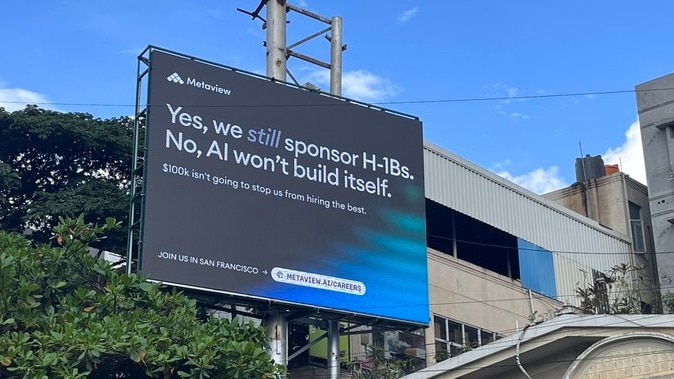
‘We still sponsor H-1Bs’: US tech firm targets IIT talent amid visa crackdown
A US-based technology firm has launched a prominent recruitment campaign outside the Indian Institute of Technology (IIT) Delhi, emphasizing its commitment to H-1B visa sponsorship despite rising costs and tightening immigration policies. This initiative highlights the firm’s determination to attract top talent from prestigious engineering institutions in India, even amidst a challenging visa landscape.
Recruitment Campaign Details
The recruitment campaign features bold advertisements that proclaim, “We still sponsor H-1Bs” and “A $100K fee isn’t going to stop us from hiring the best.” These messages are strategically placed not only outside IIT Delhi but also at other leading engineering colleges across India. The campaign aims to reassure potential candidates that the firm remains dedicated to hiring international talent, particularly in the face of increasing application fees and stricter visa regulations.
The H-1B Visa Landscape
The H-1B visa program has long been a crucial pathway for skilled foreign workers, particularly from countries like India and China, to secure employment in the United States. However, recent political developments, including the administration of former President Donald Trump, have led to heightened scrutiny and changes in immigration policy. This has resulted in a more challenging environment for foreign workers seeking employment in the US.
Impact of Fee Increases
One of the most significant changes affecting the H-1B visa program is the substantial increase in application fees, reportedly reaching as high as $100,000 for new applications. This increase has raised concerns among many companies, particularly smaller firms, prompting some to pause their international hiring efforts. In contrast, larger firms with a pressing need for skilled technology talent are willing to absorb these costs to attract the best graduates from institutions like IIT.
Changing Aspirations of IIT Graduates
For decades, graduating from IIT has been synonymous with securing a lucrative job in the US tech industry. Many IIT alumni have gone on to lead major global corporations, making the move to the US a coveted career aspiration. However, the recent uncertainties surrounding visa policies and the increased financial burden associated with H-1B applications are reshaping the aspirations of these graduates.
Domestic Opportunities on the Rise
As India’s domestic tech and startup ecosystem continues to grow, young engineers are increasingly confident in their ability to build successful careers within their own country. Major international corporations, including Microsoft and Amazon, are establishing large technology centers in India, providing ample opportunities for local talent. This shift is contributing to a changing perception among IIT graduates regarding the necessity of relocating to the US for career success.
Decline in Applications to US Colleges
Recent reports indicate a decline in applications from Indian students to US colleges since the Trump administration resumed its presidency. This trend suggests that the perception of a job in the US as the ultimate pathway to success is evolving. Many of India’s brightest young minds are now considering a range of career options, both domestically and internationally, rather than solely focusing on opportunities in the United States.
Conclusion
The recruitment campaign by the US tech firm outside IIT Delhi serves as a testament to the ongoing demand for skilled talent in the technology sector, despite the challenges posed by visa restrictions and rising costs. As the landscape of opportunities shifts, both in the US and India, the aspirations of IIT graduates are also transforming. While the allure of working in the US remains strong, the growing confidence in India’s tech ecosystem is reshaping the future of employment for many young engineers.
Note: The information presented in this article is based on recent reports and may be subject to change as the political and economic landscape evolves.


