Punjab Government to Integrate Artificial Intelligence in Agriculture Sector
Chandigarh, Jan 2: In a significant move to modernize agriculture, the Punjab government has announced plans to adopt artificial intelligence (AI) in the farming sector. This initiative is supported by the Centre of Excellence established at the Indian Institute of Technology (IIT) Ropar. The primary goals of this initiative are to boost productivity, improve sustainability, and increase farmers’ income across the state.
Overview of the Initiative
Punjab Agriculture and Farmers Welfare Minister Gurmeet Singh Khudian chaired a high-level review meeting at Punjab Bhawan to assess the progress of the initiative and chart a roadmap for the deployment of AI-driven solutions at the field level. Khudian emphasized the importance of advanced technologies delivering tangible benefits to farmers and assured government support for pilot projects and the scaling up of successful AI interventions.
Key Objectives
- Boost farm productivity.
- Enhance sustainability in agricultural practices.
- Increase farmers’ income through innovative solutions.
Implementation Strategies
During the review meeting, officials were directed to undertake several initiatives to facilitate the integration of AI in agriculture:
- Installation of automatic weather stations to provide real-time data.
- Strengthening farmer engagement for effective field data collection.
- Supporting horticulture clusters to enhance productivity.
- Expanding AI-based solutions for livestock productivity.
Collaboration with IIT Ropar
Highlighting the collaboration with IIT Ropar, Khudian welcomed the launch of national-level courses on precision agriculture and AI in agriculture. These courses are aimed at skill development among youth and capacity building for government officers. Special reservations for Punjab students and officers will strengthen the state’s human resource base in agri-technology.
Funding and Support
The initiative is backed by a substantial outlay of Rs 310 crore from the Government of India, which will support various projects under the Centre of Excellence. Pushpendra P. Singh, Associate Professor at IIT Ropar, briefed officials on the initiatives that will be implemented.
Key Projects Under the Initiative
The following key projects will be part of the AI integration in agriculture:
- AI-based Crop Advisory Systems: Providing farmers with tailored advice on crop management.
- Multilingual Farmer Chatbots: Enhancing communication and support for farmers in multiple languages.
- Digital Crop Twins: Creating virtual models of crops to predict growth and yield.
- Yield Estimation Models: Utilizing AI to forecast crop yields accurately.
- Soil Health Analytics: Assessing soil conditions to optimize farming practices.
- Weather Intelligence Tools: Offering precise weather forecasts to aid farming decisions.
- Smart Livestock Management Applications: Improving livestock health and productivity through technology.
Impact on Agriculture and Allied Sectors
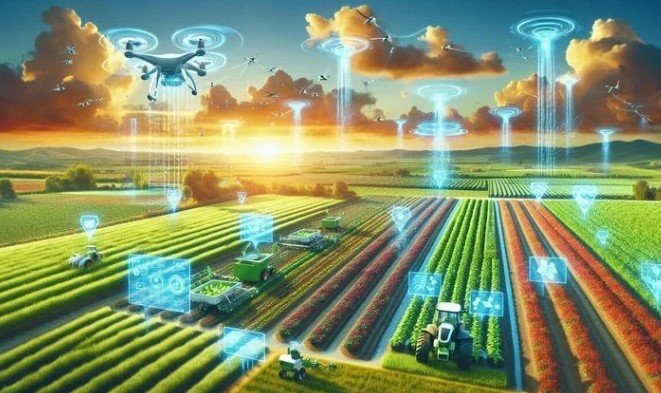
This partnership positions Punjab as a frontrunner in AI-driven agricultural transformation. The initiative aims to enhance resource efficiency, climate resilience, and sustainable growth in the agriculture and allied sectors. By leveraging AI technologies, the Punjab government hopes to create a more robust agricultural framework that benefits farmers and the economy.
Conclusion
The integration of artificial intelligence in Punjab’s agriculture sector marks a transformative step towards modernizing farming practices. With the support of IIT Ropar and a focus on skill development, the initiative is expected to empower farmers, improve productivity, and promote sustainable agricultural practices. As the state embarks on this journey, the collaboration between government bodies and educational institutions will be crucial in ensuring the success of AI-driven agricultural solutions.
Note: The information provided in this article is based on the latest announcements and initiatives by the Punjab government as of January 2026.