India Must Foster Strong Cyber Ethics: IIT-P Director
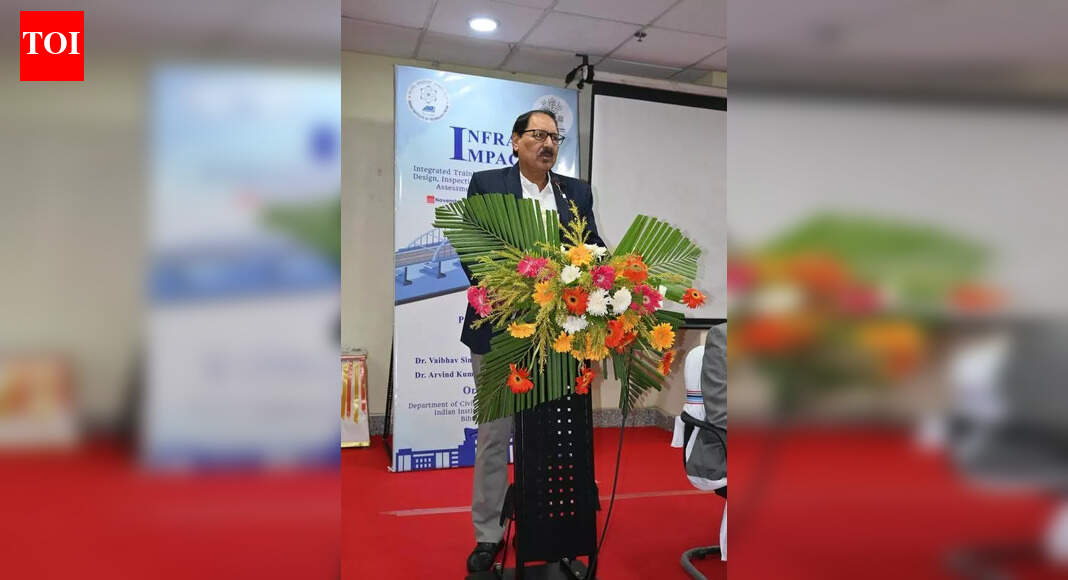
Patna: In a recent address, the director of the Indian Institute of Technology (IIT) Patna, T.N. Singh, emphasized the urgent need for India to cultivate robust cyber ethics and enhance public awareness regarding cybersecurity. Speaking at the international workshop on ‘Cyber Resilience Against Ransomware (RESTORE-2025)’, Singh highlighted that even well-educated individuals often hesitate to utilize digital services due to concerns about online fraud.
Importance of Cyber Ethics
Singh pointed out that technical safeguards alone are insufficient to combat the rising tide of cybercrime. He argued that fostering strong cyber ethics is crucial for improving everyday cyber hygiene among citizens. This initiative is particularly important as the country continues to embrace digital transformation across various sectors.
Key Highlights from the Workshop
The workshop, organized by the Centre for Development of Advanced Computing (C-DAC) in collaboration with IIT-P and the University of New South Wales (UNSW), Sydney, brought together experts from various fields to discuss the multifaceted challenges posed by cyber threats. Singh urged for the development of foolproof counter-strategies against ransomware attacks, which have become increasingly sophisticated.
Collective Action Against Ransomware
Abhinav Dixit, head of C-DAC Patna, stressed the importance of collective action in addressing ransomware threats. He acknowledged IIT-Patna’s crucial role in this collaboration and expressed confidence that RESTORE-2025 would create synergy between research, real-world experience, and India’s cybersecurity priorities.
Indigenous Solutions for Cybersecurity
Aditya Kumar Sinha, executive director of C-DAC Mumbai, praised the cybersecurity team at C-DAC-Patna for developing indigenous solutions such as GHOST, Ganga Laksham, and EYES, which are aimed at addressing national security challenges. He noted that platforms like RESTORE-2025 are essential for anticipating new threats, enhancing response capabilities, and fostering a robust, innovation-driven cybersecurity ecosystem.
Strategic Defense Perspectives
Commodore S. Vombatkere (Retd) of the Indian Navy provided a strategic defense viewpoint, stating that cybersecurity is no longer solely about protection. Instead, true resilience lies in the ability of systems to continue functioning and recover rapidly after an attack. This perspective is critical as organizations seek to bolster their defenses against increasingly prevalent cyber threats.
Policy Framework and Cyber Threats
Former director of the DRDO’s scientific analysis group, P.K. Saxena, reiterated that ransomware and cyber threats are high-priority concerns within India’s policy framework. He acknowledged the significant contributions of IIT-Patna and C-DAC Patna in advancing national cybersecurity capabilities, emphasizing the need for ongoing collaboration among educational institutions, government agencies, and industry stakeholders.
Technical Program Insights
The technical program of the workshop featured a keynote address on India’s cyber vulnerabilities and policy imperatives. Additionally, demonstrations of indigenous ransomware defense tools, including REDS and EYES developed by C-DAC-Patna, showcased the innovative approaches being taken to combat cyber threats.
Expert Sessions
Experts from various institutions, including C-DAC Patna, IIIT-Hyderabad, IISc-Bangalore, IIT-Kharagpur, IIT-BHU, and SETS-Chennai, delivered sessions on advanced machine learning attacks, side-channel vulnerabilities, and system-driven methods for ransomware detection and analysis. These discussions provided valuable insights into the evolving landscape of cybersecurity.
Panel Discussion on Operational Challenges
A high-level panel discussion brought together senior representatives from the Economic Offences Unit, CERT-In, Forensic Science Laboratory, and NIC-Bihar. They shared insights on operational challenges, response frameworks, and policy pathways to strengthen ransomware resilience across government and critical infrastructure sectors.
Conclusion
As India continues to advance in the digital realm, the emphasis on fostering strong cyber ethics and enhancing public awareness is paramount. The collaboration among educational institutions, governmental bodies, and industry leaders is essential to develop effective strategies against cyber threats. Workshops like RESTORE-2025 play a critical role in bridging the gap between research and real-world applications, ultimately contributing to a safer digital environment for all.
Note: The information presented in this article is based on the proceedings of the RESTORE-2025 workshop and insights from various experts in the field of cybersecurity.