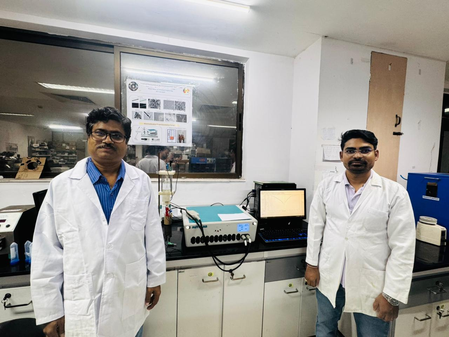
IIT Guwahati’s Advanced Epoxy Coating to Protect Steel Structures in Seawater
Researchers from the Indian Institute of Technology (IIT) Guwahati have developed a groundbreaking corrosion-resistant epoxy coating designed to protect steel structures exposed to seawater and high-salinity environments. This innovative solution addresses a critical challenge faced by various industries, particularly those operating in marine settings.
The Challenge of Corrosion
Corrosion is a natural and gradual process that deteriorates metal surfaces, significantly shortening the lifespan of essential structures. This issue is particularly pronounced in environments exposed to saltwater, such as:
- Offshore platforms
- Coastal bridges
- Port infrastructure
- Marine pipelines
Beyond structural integrity, corrosion also leads to environmental degradation, impacting both human and aquatic life. Traditional barrier coatings, while commonly used for corrosion protection, often fail to provide complete coverage. Over time, these coatings develop microscopic defects that allow moisture and salts to penetrate, ultimately damaging the underlying metal.
Innovative Solution: RGO-ZnO-PANI Nanocomposite
To combat the limitations of conventional coatings, the research team at IIT Guwahati has developed a novel nanocomposite epoxy coating. This advanced coating incorporates:
- Reduced Graphene Oxide (RGO)
- Zinc Oxide (ZnO)
- Polyaniline (PANI)
The innovative process involves attaching zinc oxide nanorods to reduced graphene oxide and subsequently wrapping this structure with polyaniline. This composite is then blended into an epoxy coating and subjected to various characterization methods to evaluate its performance.
Performance Evaluation
The developed epoxy coating has demonstrated superior performance compared to standard epoxy coatings. Key advantages include:
- Densely Packed Barrier: The coating forms a denser and more uniform barrier against corrosive elements.
- Stronger Adhesion: It exhibits stronger adhesion to the steel surface, enhancing its protective capabilities.
- Effective Corrosion Resistance: The coating significantly slows the movement of corrosive elements, providing long-lasting protection.
These characteristics make the epoxy coating particularly suitable for applications in:
- Marine infrastructure
- Offshore platforms
- Shipbuilding
- Coastal pipelines
- Other steel structures exposed to continuous saltwater exposure
Future Directions
According to Professor Chandan Das, one of the leading researchers on the project, “The incorporation of RGO-ZnO-PANI nanocomposite into epoxy coating offers a promising strategy for achieving long-term corrosion resistance in harsh marine environments.” The research team is currently focused on assessing the long-term durability, real-world performance, and life-cycle impact of this innovative coating.
Research Status and Implications
It is important to note that this research is still at the laboratory stage. The findings are subject to further validation and are not yet ready for commercial application. However, this development adds to the ongoing research on corrosion-resistant materials and provides a pathway toward improving the reliability and longevity of structures operating in marine and high-salinity conditions.
Conclusion
The innovative epoxy coating developed by IIT Guwahati represents a significant advancement in the field of corrosion protection for steel structures. With its unique composition and enhanced performance characteristics, this coating has the potential to revolutionize the way industries approach corrosion resistance in marine environments. As research progresses, the implications for infrastructure longevity and environmental protection could be profound.
Note: This article reflects the findings and developments as of November 2025 and is subject to further research and validation.