IIT Bombay–Monash Team Cracks TB Mystery
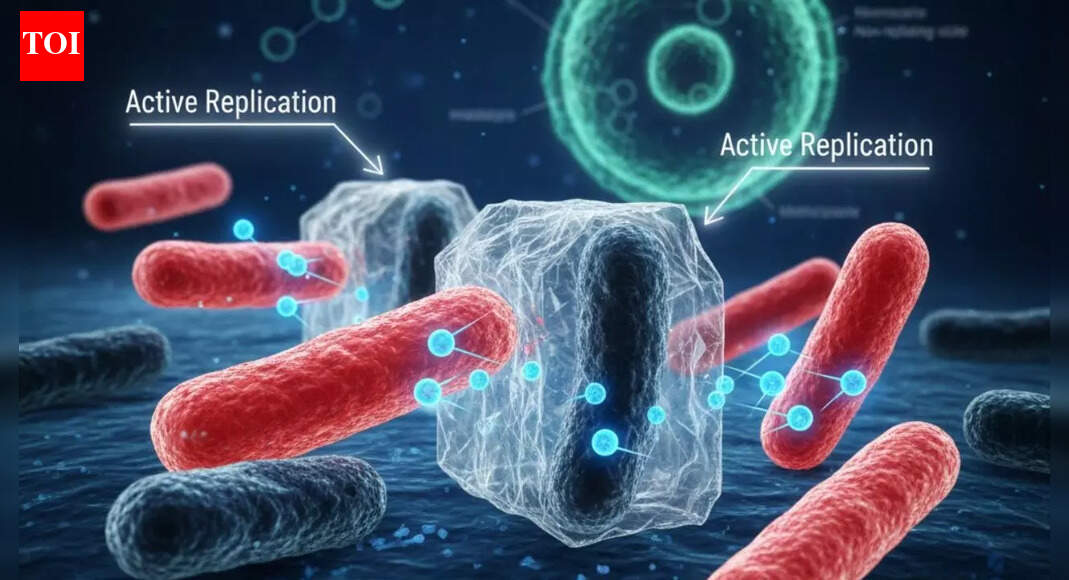
Scientists have uncovered a significant reason why tuberculosis (TB) bacteria evade antibiotics by entering a dormant state. Researchers from IIT Bombay and Monash University have discovered that dormant TB bacteria develop a thicker, more rigid outer membrane, which acts as a barrier preventing drugs from entering. This groundbreaking discovery suggests that combining existing antibiotics with molecules that weaken this membrane could significantly enhance treatment effectiveness against this persistent disease.
The Ongoing Challenge of Tuberculosis
For over a century, tuberculosis has been a relentless global health challenge. Caused by the bacterium Mycobacterium tuberculosis, it has defied time and medical advancements alike. Despite the availability of antibiotics, vaccines, and extensive public health campaigns, the incidence of TB remains alarmingly high. In 2023 alone, an estimated 10.8 million people fell ill with TB, resulting in approximately 1.25 million deaths worldwide. India, bearing the brunt of this disease, reported over 2.6 million cases in 2024.
Understanding Latent Tuberculosis
One of the key factors in TB’s persistence is its ability to enter a dormant state within the human body. This phase, known as latent or dormant TB, resembles a biological hibernation. In this state, the bacteria remain alive but inactive, showing no symptoms such as cough or fever. Individuals with latent TB do not transmit the disease, and it can remain dormant for years. However, a weakened immune system—due to another illness, HIV, or certain medications—can reactivate the bacteria, leading to active TB disease.
The Research Initiative
A research team led by Professor Shobhna Kapoor from the Department of Chemistry at IIT Bombay and Professor Marie-Isabel Aguilar from Monash University aimed to investigate why dormant TB bacteria are largely unaffected by antibiotics. Their findings, published in the journal Chemical Science, reveal the mechanisms that allow TB to endure treatment and suggest potential strategies for improving drug efficacy.
Investigating the Lipid Membrane
Previous studies indicated that the answer might lie not within the bacteria itself but rather in the lipid membrane that surrounds it. The research team analyzed how the bacterial membranes change when TB transitions from an active phase to a dormant state, focusing on whether these alterations affect the ability of antibiotics to penetrate the bacteria.
Due to the hazardous nature of working with live TB bacteria, the team utilized its non-pathogenic relative, Mycobacterium smegmatis, which behaves similarly to TB but is safe for laboratory handling. They cultivated this bacterium under two conditions: one where it was actively dividing and another that mimicked a dormant, slow-growing state.
Testing Antibiotics Against Dormant Bacteria
The researchers tested four commonly used antibiotics against the dormant bacteria: rifabutin, moxifloxacin, amikacin, and clarithromycin. The results were striking. Dormant bacteria required two to ten times more drug concentration to achieve the same effect as active bacteria. Professor Kapoor noted, “The same drug that worked well in the early stage of the disease would now be needed at a much higher concentration to kill the dormant/persistent TB cells.” This change was not due to genetic mutations, which typically explain antibiotic resistance; instead, it was likely due to the membrane’s structural changes.
Mapping the Membrane Changes
The research team conducted a detailed analysis of the bacterial membrane using advanced mass spectrometry, identifying over 270 different lipids. They found that active bacteria contained high levels of glycerophospholipids and glycolipids, while dormant cells were characterized by a thick, wax-like membrane rich in fatty acyls. Lead author Anjana Menon, a PhD scholar at the IITB-Monash Research Academy, explained, “We found clear differences between the lipid profiles of active and dormant cells.”
The physical properties of the membranes also differed significantly. Using fluorescence-based techniques, the researchers measured membrane fluidity, discovering that active membranes were loose and fluid, while dormant membranes were rigid and tightly packed. The level of cardiolipin, a lipid that helps maintain membrane flexibility, decreased dramatically in dormant cells. Menon noted, “When the level of cardiolipin falls, the membrane becomes tighter and less permeable.”
The Barrier to Antibiotic Penetration
To further understand the impact of the membrane on antibiotic efficacy, the team tracked the journey of rifabutin. They found that while rifabutin easily penetrated active cells, it struggled to enter dormant ones. Professor Kapoor emphasized, “The rigid outer layer becomes the main barrier. It is the bacterium’s first and strongest line of defence.”
Proposed Solutions for Treatment Enhancement
Given that the membrane poses a significant challenge, the researchers propose that weakening it could enhance the effectiveness of existing antibiotics. Instead of developing new drugs, they suggest combining old antibiotics with molecules that can loosen the outer membrane. Antimicrobial peptides—small proteins that can gently open membranes—are a promising avenue. These peptides do not kill bacteria on their own but can facilitate the entry of antibiotics, making them more effective.
Professor Kapoor stated, “These peptides alone don’t kill the bacteria, but when combined with antibiotics, they help the drugs enter and act more effectively.”
Next Steps in Research
The next phase of this research involves repeating the study using actual TB bacteria in high-security laboratory conditions. “Our lipid analysis is very detailed. It can easily be applied in labs that work with the actual TB strain,” shared Menon. If successful, this research could lead to shorter treatment durations, improved patient outcomes, and a significant reduction in the burden of a disease that has persisted for over a century.
Note: This article highlights the significant advancements in understanding tuberculosis and the potential for improved treatment strategies through collaborative research efforts.