IIT-B Develops India’s First Indigenous Quantum Diamond Microscope for Neuroscience Research
On November 12, 2025, the Indian Institute of Technology, Bombay (IIT-B) announced a significant breakthrough in the field of quantum sensing with the development of India’s first indigenous Quantum Diamond Microscope (QDM). This innovative technology, created by the P-Quest Group under the National Quantum Mission (NQM) of the Department of Science and Technology (DST), aims to enhance research in neuroscience and materials science.
Overview of the Quantum Diamond Microscope
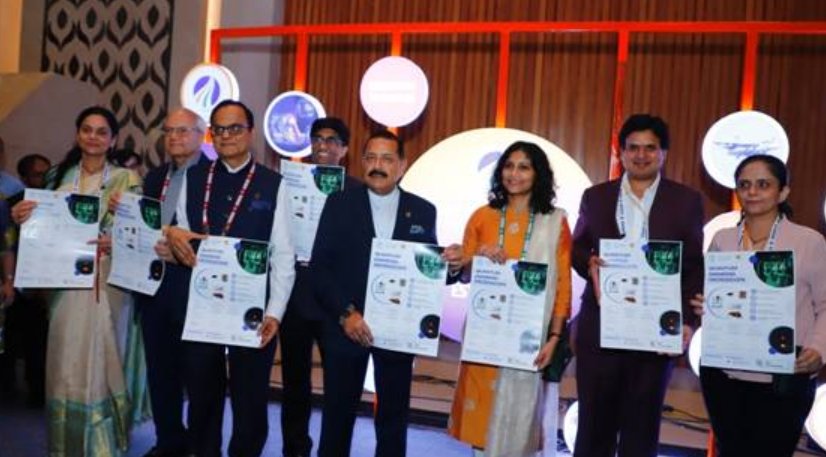
The Quantum Diamond Microscope is designed for dynamic magnetic field imaging, marking a milestone in quantum sensing technology. The formal announcement took place during the Emerging Science Technology and Innovation Conclave (ESTIC 2025), where it was highlighted as a pioneering achievement for India, earning the country its first patent in the quantum sensing domain.
Key Features and Applications
The QDM has promising applications in various fields, particularly in:
- Neuroscience: The microscope can facilitate advanced studies of brain activity and neural networks.
- Materials Research: It allows for detailed analysis of material properties at the nanoscale.
- Semiconductor Diagnostics: The QDM is poised to transform the non-destructive evaluation of semiconductor chips by mapping magnetic fields in three-dimensional layers within encapsulated chips.
Technological Advancements
The QDM utilizes nitrogen-vacancy (NV) centers in diamond, providing a powerful platform for high-resolution three-dimensional magnetic field imaging. This technology is particularly relevant as the electronics industry increasingly adopts 3D chip architectures, which often pose challenges for conventional diagnostic tools that cannot visualize buried current paths and multilayer charge flow.
Impact on Electronics and AI Integration
With the rise of advanced electronics, cryogenic processors, and autonomous systems, the need for precise diagnostic tools has never been greater. The QDM offers a pathway toward direct, high-resolution 3D magnetic mapping of integrated circuits, batteries, and microelectronic devices. Furthermore, the research team, led by Professor Kasturi Saha, aims to integrate the QDM with artificial intelligence (AI) and machine learning (ML) techniques to enhance computational imaging capabilities.
Collaborative Efforts and Future Directions
The development of the QDM is part of a broader initiative aligned with India’s National Quantum Mission. The project has garnered support from key figures in the scientific community, including:
- Dr. Jitendra Singh, Union Minister for Science and Technology
- Prof. Ajay K. Sood, Principal Scientific Adviser to the Government of India
- Prof. Abhay Karandikar, Secretary of the Department of Science and Technology
The collaboration among these experts emphasizes the importance of advancing quantum technologies in India and their potential applications across various sectors.
Conclusion
The introduction of the Quantum Diamond Microscope represents a significant advancement in quantum sensing technology, with the potential to revolutionize research in neuroscience and materials science. By enabling high-resolution imaging of magnetic fields, this innovative tool is set to enhance our understanding of complex systems in both biological and technological contexts.
Note: This article reflects the latest developments in quantum technology as of November 2025 and highlights the ongoing efforts in India to lead in this critical area of research.