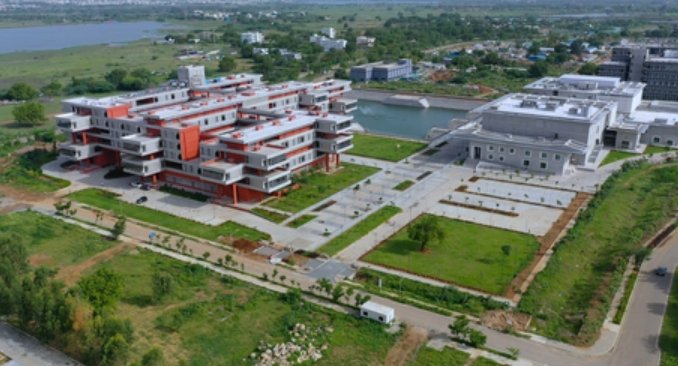
IIIT Hyderabad Hosts Bahu Bhasa 2025 to Promote Language Diversity
The International Institute of Information Technology (IIIT) Hyderabad recently hosted the Bahu Bhasa 2025 event from November 6 to 8, 2025. This significant gathering was organized by the Open Knowledge Initiatives (OKI) and the Language Technologies Research Centre (LTRC) with the aim of promoting discussions around Indian languages through the lenses of policy, technology, and community engagement.
Understanding Bahu Bhasa
The term “Bahu Bhasa” translates to “many languages,” and it challenges the traditional linguistic hierarchy that often prioritizes standardized and script-bound languages. This event served as a platform not only to celebrate the rich tapestry of Indian languages but also to address pressing questions regarding preservation, accessibility, and equity in an increasingly digitized world.
Day 1 Highlights
On the first day, Prof. Deva Priyakumar, the Dean of R&D at IIIT Hyderabad, delivered the opening remarks, urging researchers to transcend the confines of academic publications. He emphasized the importance of developing practical tools that can address real-world communication challenges.
Prof. Vasudeva Varma, Head of LTRC, highlighted a “silent crisis of storytelling” in India, stressing the need for the nation to take ownership of its linguistic heritage to prevent external definitions of its identity. The keynote address by author and educationist Vadrevu Chinaveerabhadrudu called for a transformation in education towards a collaborative and open system of knowledge creation.
Workshops and Panels
The day featured various panels and workshops focusing on:
- Language policy gaps
- Civic technologies for safer online spaces
- Community-driven approaches for low-resource languages
The day concluded with the release of Ho-language works by the Adivasi Ho Samaj Mahasabha and a fireside chat featuring Prof. P. Sainath and Prof. Dipti Misra Sharma, discussing the future of language activism.
Day 2 Insights
Day two commenced with a keynote address by Prof. Arjun Ghosh from IIT Delhi, who explored the dynamic relationship between technology, language, identity, and access. Demonstrations showcased community-driven innovations, such as:
- Assamese typing tools
- Sindhi and Chhattisgarhi language archives
- A Tamil spell-checker
The day also included a hands-on workshop on BhashaVerse by LTRC, alongside a panel discussion addressing the politics of translation, access, and identity in the digital realm. This was followed by an interactive session hosted by Science Gallery Bengaluru.
Day 3 Discussions
The final day began with a panel discussion focused on building resources for low-resource and low-visibility contexts. The discussions emphasized the social labor involved in documentation and the necessity for community agency in shaping linguistic futures.
Demonstrations by organizations such as Swecha, OSM Kerala, Wiki Loves, and Bengali Wikisource illustrated how open and collaborative infrastructures can democratize access and preserve linguistic knowledge. A workshop critically examined translation evaluation methodologies, comparing human and automated systems.
The closing keynote by Dr. Rukmini Banerji from Pratham presented an inspiring vision of people-centered learning built on trust, simplicity, and non-linearity.
A Collective Call to Action
Bahu Bhasa 2025 emerged as a collective call to action aimed at preserving and revitalizing India’s diverse linguistic heritage. The event reaffirmed that the future of linguistic diversity will not solely be determined by technological advancements but will also depend on the active participation of people and communities who continue to live, create, and dream in their languages.
Note: The insights and discussions from Bahu Bhasa 2025 highlight the importance of language diversity in a globalized world and the need for collaborative efforts to ensure that all voices are heard and preserved.