Former Nepal PM Baburam Bhattarai at IIT Bombay: Addressing South Asia’s Chronic Poverty
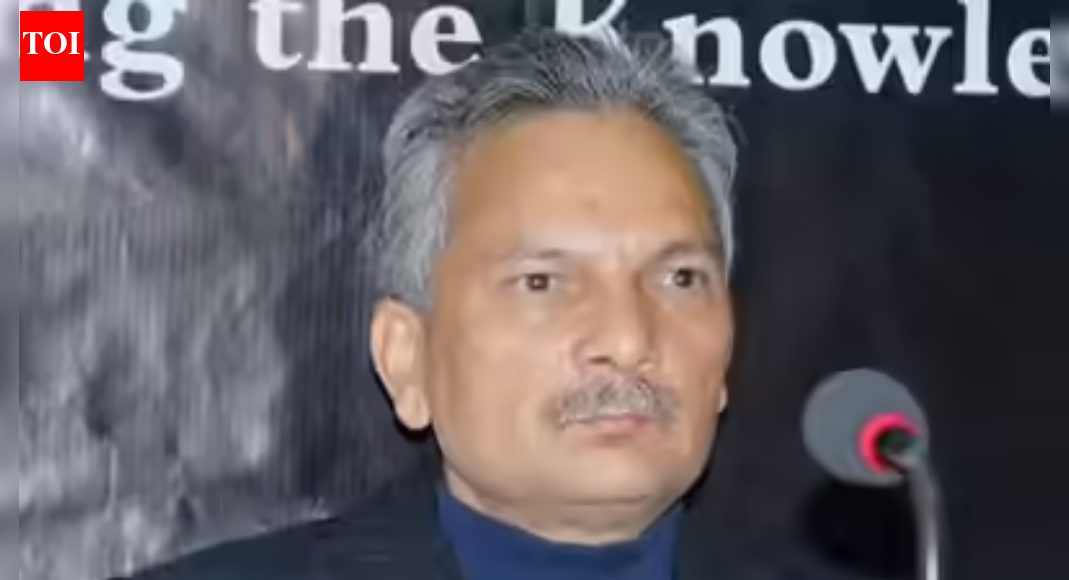
Mumbai: Former Prime Minister of Nepal, Baburam Bhattarai, delivered a compelling critique of South Asia’s political economy during his address at IIT Bombay’s TechFest. He emphasized that the region’s enduring poverty, inequality, and instability stem from failed institutions, weak state capacity, and the inability to establish inclusive democracies.
Political Context and Historical Background
Bhattarai, who is also an architect by training, entered politics through Nepal’s pro-democracy movement. Reflecting on Nepal’s tumultuous political history, he highlighted the significance of the country’s struggle against monarchical rule, which ultimately enabled him to contribute to the drafting of Nepal’s new constitution. He noted that Nepal drew inspiration from India’s constitutional framework, stating, “I borrowed many phrases and ideas from the Indian Constitution, whose author was the Babasaheb Ambedkar.”
Lessons from Nepal’s Political Landscape
According to Bhattarai, the recent uprisings in Nepal serve as a “wake-up call” for the political and economic elite. He attributed these movements to deep-rooted institutional failures characterized by corruption, low state capacity, and chronic political instability. He pointed out that Nepal has experienced “30 governments in 30 years,” which has hindered consistent policymaking and long-term development.
South Asia’s Development Challenges
Linking Nepal’s experiences to broader regional trends, Bhattarai expressed concern over South Asia’s development record, stating, “Forty percent of the world’s poor live in South Asia. That is a slap to the face.” He argued that a nation’s prosperity is contingent upon the establishment of inclusive institutions rather than “extractive and feudal” ones.
He explained that Nepal’s stagnation for decades was largely due to authoritarian monarchies and rigid traditional hierarchies. “While the West criticized, thought, and voted, we remained stuck,” he remarked. He also mentioned Nepal’s geopolitical constraints, noting, “We have been caught between two powers and isolated for a millennium, and we got trapped in a cycle of dependency and unequal relationships.” As a consequence, Nepal currently has the lowest levels of foreign investment in South Asia.
Call for Structural Reforms
Bhattarai emphasized the need for structural reforms in Nepal and the wider region, advocating for land, labor, and social justice reforms to tackle inequality and exclusion. He warned of the widening wealth gaps and environmental degradation affecting the region, stating, “We share the rivers and the mountains, so we have to get together to take care of them.” He made a strong case for regional cooperation on climate and natural resource management.
Importance of Economic Integration
Furthermore, Bhattarai underscored the necessity of deeper economic integration within South Asia as a pathway to prosperity. He recalled the SAARC summit in the Maldives in 2011, where he urged then Indian Prime Minister Manmohan Singh and Pakistan’s Prime Minister Yusuf Raza Gilani to set aside bilateral disputes and collaborate for regional growth and stability.
A Pragmatic Approach to Governance
In his critique of ideological extremes, Bhattarai called for South Asia to move beyond the binary of unregulated economic liberalism and rigid state fundamentalism. He proposed a pragmatic middle path, which he termed “scientific humanism,” that balances market dynamics, state intervention, and social justice. “We have fought for democracy,” Bhattarai concluded, “Now we have to use it wisely.”
Conclusion
Baburam Bhattarai’s insights at IIT Bombay shed light on the multifaceted challenges facing South Asia, particularly in terms of governance and economic development. His emphasis on inclusive institutions, structural reforms, and regional cooperation presents a roadmap for addressing the chronic poverty that plagues the region.
Note: The views expressed in this article reflect the opinions of Baburam Bhattarai and do not necessarily represent the views of IIT Bombay or The Times of India.