An IIT Madras Professor Explores Girlhood and Heartbreaks in the 1910s
In a remarkable literary endeavor, Kalpana Karunakaran, an Associate Professor at IIT Madras, has penned a book titled A Woman of No Consequence. This work delves into the life of her grandmother, Panjakam, and offers a poignant exploration of girlhood, heartbreak, and the socio-political landscape of early 20th-century Madras.
The Book Launch
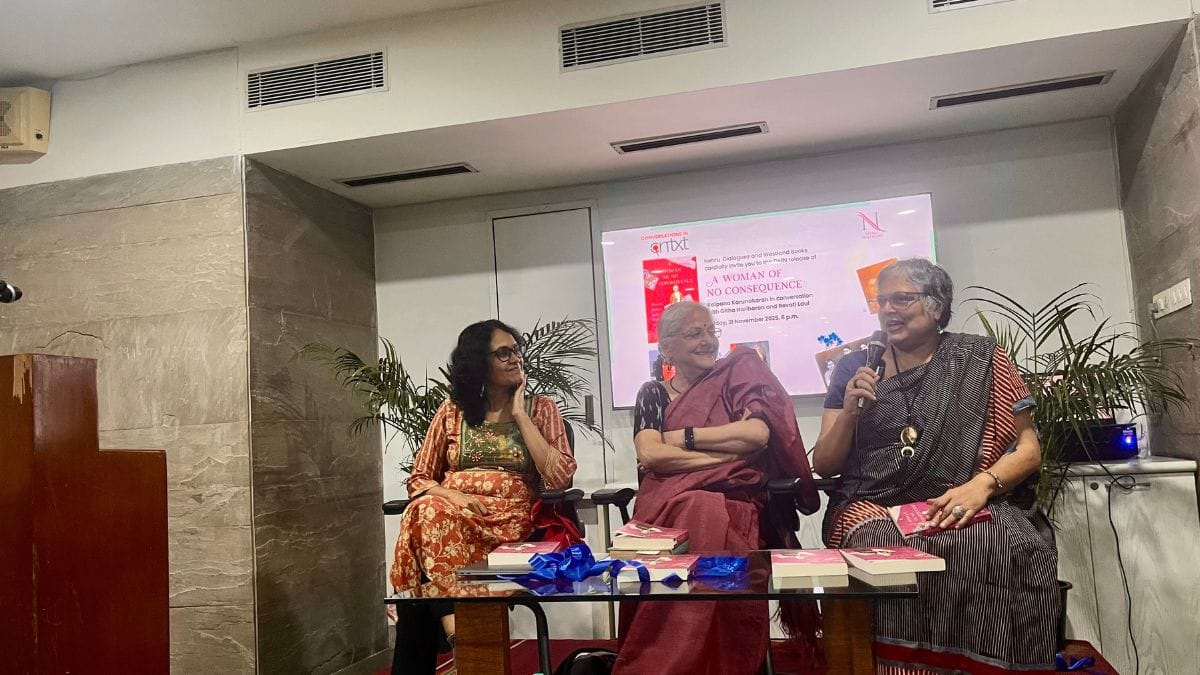
The book was launched at Jawahar Bhawan in New Delhi, where notable figures such as writer Githa Hariharan and journalist Revati Laul joined Karunakaran to discuss the themes of the book. They used Panjakam’s narrative as a springboard to explore broader questions of love, longing, and resistance.
Unveiling a Forgotten Past
Karunakaran’s book is a heartfelt reconstruction of her grandmother’s life, which she discovered through a trove of family papers. “In my book, diverse sources are used to reconstruct the story of a girl child,” Karunakaran explained during the launch. Her grandmother’s experiences reflect the challenges faced by many women in the 1910s and 1920s, particularly in terms of education and marriage.
A Life Interrupted
For many women of that era, education often came to a “cruel, abrupt” end as they were pressured into marriage. Panjakam meticulously documented her life, dreams, and the societal constraints that shaped her existence. Karunakaran describes this narrative as autofiction, a term that had not yet been coined during Panjakam’s lifetime.
Exploring Feminism and Personal Histories
During the launch, Githa Hariharan emphasized the importance of understanding the silent histories that lie within families. She noted, “While we all learned this phrase, the personal is political, what does it really mean?” This inquiry is particularly relevant in the context of Panjakam’s life, which intertwines personal struggles with broader societal issues.
The Complexity of Womanhood
Panjakam’s story is not just about personal hardship; it is also about her quest for education and self-identity. She raised five children while navigating the complexities of an unhappy marriage, all the while yearning for knowledge and connection with the world beyond her immediate surroundings. Her letters to her daughter reflect this desire, as she inquired about far-off places like Cuba and the United States.
Different Shades of Feminism
Revati Laul, who read Karunakaran’s book shortly after Arundhati Roy’s Mother Mary Comes To Me, noted the contrasting representations of feminism in both works. “This is the other kind of political feminism which is lithe and light,” Laul remarked. She appreciated how Karunakaran’s narrative allowed her to embrace her mother’s complexities without anger, highlighting the importance of understanding familial relationships within feminist discourse.
Panjakam’s Multifaceted Identity
Panjakam lived multiple lives, often expressing herself through fictionalized characters. Karunakaran explained that what Panjakam found difficult to articulate in the first person, she could convey through characters like Meera, Kamala, and Dakshmi. This distancing strategy allowed her to explore her own experiences while maintaining a semblance of privacy and protection.
The Legacy of Documentation
Karunakaran was fortunate that her mother, Mythili Sivaraman, preserved every scrap of paper related to Panjakam’s life. This extensive archive provided Karunakaran with a unique lens through which to view her family’s history, revealing a narrative that is deeply intertwined with the broader story of women and resistance in India.
The Role of Caregiving
As Karunakaran navigated her own responsibilities, she became a caregiver for her mother, who was diagnosed with Alzheimer’s and dementia. This experience profoundly impacted her understanding of love and presence. “It was about being everything I wanted to be in the world,” she reflected, emphasizing the importance of witnessing her mother’s journey and identity transformation.
A Powerful Political Love
A Woman of No Consequence encapsulates the essence of unwavering political love. Despite the pain and challenges depicted in Panjakam’s life, the narrative is devoid of anger. Instead, it emerges as a testament to the resilience of women and their stories, illuminating the complexities of love, identity, and resistance.
Conclusion
Kalpana Karunakaran’s book is not merely a recounting of her grandmother’s life; it is a significant contribution to the discourse on womanhood, feminism, and personal history. By weaving together the threads of her family’s past, she offers readers a chance to reflect on the broader implications of individual stories in shaping collective narratives.
Note: This article highlights the themes and discussions surrounding Kalpana Karunakaran’s book, reflecting on the importance of personal histories in understanding societal dynamics.