
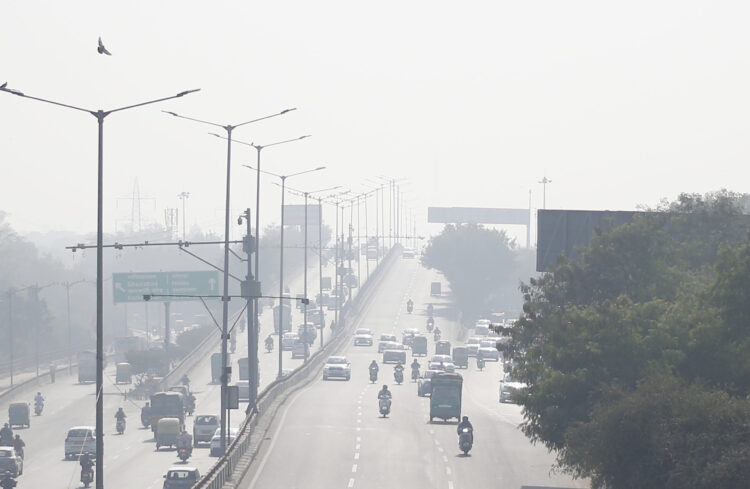
Air Pollution: Delhi Govt To Evaluate Innovative Ideas At IIT-Delhi
New Delhi: In a significant move to combat air pollution, the Delhi government has announced an Innovation Challenge aimed at evaluating innovative solutions at the Indian Institute of Technology (IIT) Delhi. This initiative is set to take place in the last week of December, as confirmed by Environment Minister Manjinder Singh Sirsa.
Overview of the Innovation Challenge
The Innovation Challenge will feature a live, multi-day evaluation and showcase of shortlisted entries. The event will be facilitated by the Internal Technical Evaluation Committee (ITEC), which comprises eminent scientists, professors, and subject-matter experts. Their primary objective is to identify practical, scalable, and impactful solutions for improving Delhi’s air quality.
Entry Evaluation Process
In the initial screening round, nearly 300 entries were assessed against stringent eligibility and technical criteria. The most promising ideas have been invited to present their solutions before the ITEC in a transparent and public manner. Minister Sirsa emphasized that this stage represents a crucial juncture where theoretical ideas must demonstrate their feasibility in real-world applications, particularly in reducing Particulate Matter (PM) pollutants.
Focus Areas of the Challenge
The Innovation Challenge is concentrated on low-cost, easy-to-maintain, and scalable technologies, categorized into two main areas:
- Category A: Solutions aimed at reducing, absorbing, or capturing PM2.5 and PM10 emissions from BS-IV or below vehicles.
- Category B: Solutions focused on reducing, absorbing, or capturing PM2.5 and PM10 from the ambient air.
Presentation and Evaluation Format
Each invited applicant will deliver a structured presentation and showcase their prototype, model, device, or equipment in front of the ITEC panel. The success of this initiative will be evaluated based on:
- Demonstrable emission reduction.
- Adaptability to Delhi’s environmental conditions.
- Readiness for real-world deployment.
Sirsa noted that the government is seeking solutions that can swiftly transition from trial phases to practical applications in urban settings, including streets, depots, or pollution hotspots. The event is designed as a showcase where innovators can pitch their ideas to a panel of experts, respond to technical inquiries, and receive immediate feedback in a public forum.
Engagement and Transparency
The sessions will span multiple days, with 3 to 4 rounds planned for each batch of entries screened and shortlisted by the Internal Screening Committee (ISC) and ITEC. The audience will consist of government officials, members of the Delhi Pollution Control Committee (DPCC), students and alumni from IIT Delhi, and the general public, ensuring broad outreach and engagement.
“People have a right to see how decisions are made regarding clean-air technologies, which ideas are selected, and the rationale behind the allocation of public funds for innovation,” Sirsa stated. This format aims to enhance transparency and citizen involvement in environmental governance.
Evaluation Criteria
During the showcase at IIT Delhi, the ITEC will assess entries based on several criteria:
- Innovation and scientific merit.
- Feasibility of deployment.
- Adaptability to the specific conditions of Delhi.
- Cost-effectiveness.
- Compliance with environmental and legal standards.
Solutions that meet the established threshold scores will progress to field trials and laboratory testing, with the DPCC covering costs up to the guidelines’ ceiling. Additionally, those with existing robust test or field trial reports deemed deployable by ITEC may bypass directly to the final DPCC-ITEC review of integrated data for potential city-scale adoption.
Incentives for Winning Projects
Minister Sirsa announced that successful projects from the Innovation Challenge will receive tiered incentives from the DPCC. The incentives include:
- Rs 5 lakh per project upon successful evaluation and testing by ITEC.
- An additional Rs 50 lakh for solutions verified by NPL-equivalent laboratories and recommended for government adoption.
This funding strategy aims to support proven, deployable technologies that effectively reduce PM2.5 and PM10 levels in Delhi.
Long-Term Strategy for Cleaner Air
The Innovation Challenge is part of a broader, long-term strategy to enhance air quality in Delhi through science-based interventions and systemic reforms. The government is committed to implementing solutions that work throughout the year, rather than only during peak pollution periods.
Conclusion
The Delhi government’s initiative to evaluate innovative ideas at IIT Delhi marks a proactive step in addressing the critical issue of air pollution. By engaging experts, innovators, and the public in this process, the government aims to foster transparency and accountability while seeking effective solutions to improve air quality in the capital.
Note: The information presented in this article is based on the latest updates regarding the Innovation Challenge and its implications for air quality management in Delhi.


