India’s First Wearable Air Purifier Gains Buzz Amid Delhi’s Toxic Air
As air quality in Delhi-NCR continues to hover in the “severe” zone, a new innovation from India is generating significant interest: the Atovio Pebble, the country’s first portable air purifier. With rising concerns over worsening pollution levels, particularly during the smog season, the demand for this compact device has surged dramatically.
Introduction to the Atovio Pebble
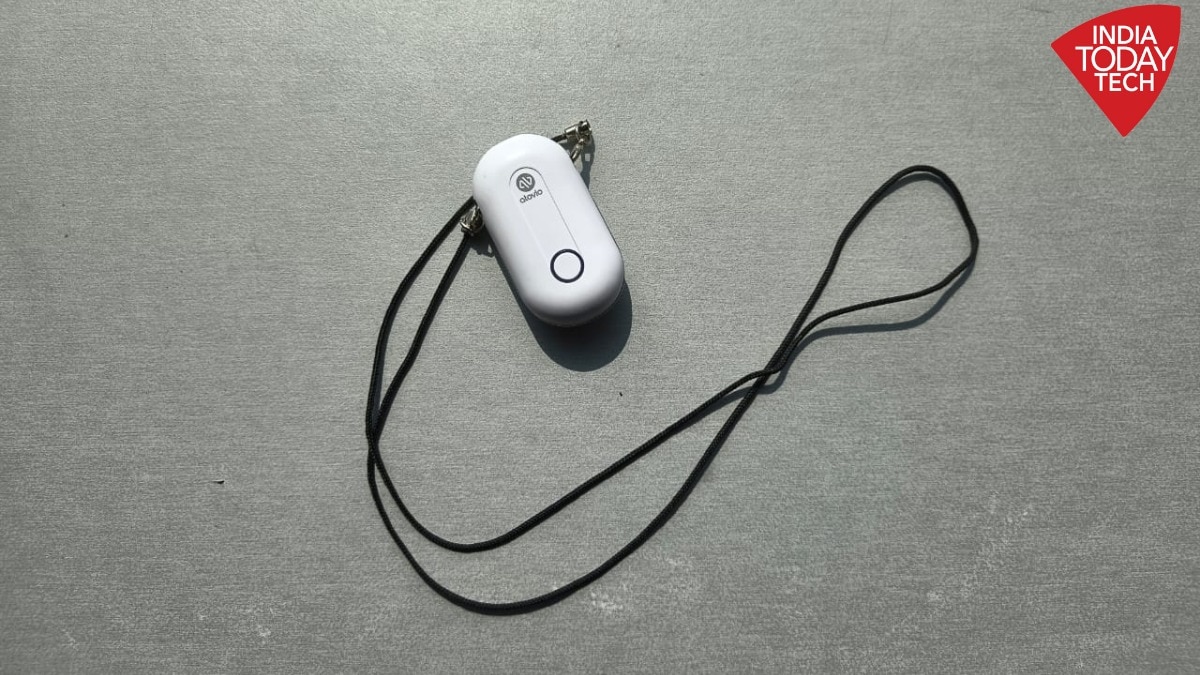
Launched in December of last year, the Atovio Pebble is designed to be worn around the neck like a pendant. In just a few months, the product has sold around 15,000 units, with approximately 30-35% of those sales occurring in the past few weeks, largely driven by consumers in Delhi and its neighboring cities.
Features and Technology
The Pebble is marketed as a personal clean-air zone and is both portable and rechargeable. It employs what the company refers to as Advanced Variable Anion Technology, which aims to neutralize various pollutants such as PM2.5, PM10, bacteria, viruses, and other nanoparticles. This technology is touted as being more effective than traditional HEPA filters.
According to Anmay Shahlot, one of the co-founders of the Gurugram-based startup behind the Pebble, the device includes a turbo mode for days when the Air Quality Index (AQI) exceeds 200. “It’s built for Indian conditions, where pollution levels are uniquely severe,” he stated.
Testing and Findings
The Atovio Pebble has undergone testing at IIT Kanpur, where it was found to reduce respirable particulate matter in the breathing zone by an average of 43.8%. The tests were conducted in a semi-open 10-meter room with outdoor air inflow, simulating real-world conditions. The report concluded that even with continuous pollutant inflow, the wearable purifier created a cleaner breathing microenvironment, which is crucial for respiratory exposure.
However, the company acknowledges that the device works best when worn approximately 25 centimeters from the nose. It is considered safe for individuals over five years old, with exceptions for pregnant women and those with pacemakers.
Expert Opinions and Cautions
Despite the innovative design and technology, independent experts urge caution regarding the reliance on such devices. Pulmonologists and scientists emphasize that while the Pebble may offer convenience, there is limited evidence to suggest that wearable purifiers are more effective than high-grade masks, such as N95 or N99.
Dr. Anurag Agarwal, a pulmonologist and scientist, noted, “While the device is interesting, its strongest evidence is for larger particles like incense smoke, and weaker for typical urban air pollution.” He further explained that for fine particulate matter, the Pebble’s effectiveness is around 40%, which is comparable to a simple three-ply mask. In contrast, a proper N95 mask, although uncomfortable for some, would provide better protection.
Dr. Vivek Nangia, vice-chairman and head of pulmonology at Max Healthcare, added that many efficacy tests cited by the company were conducted in controlled environments. “Another report measured only particles between one and ten microns, whereas the most toxic particles are smaller than 0.1 microns. We need more robust, real-world studies to validate such claims,” he stated.
Conclusion
The Atovio Pebble presents a novel solution for individuals seeking added protection during the peak smog season in Delhi. However, experts continue to stress that traditional methods, such as wearing certified masks and minimizing outdoor exposure, remain the most effective defenses against the region’s toxic air. As air quality remains a pressing issue, innovations like the Pebble may play a role, but they should not replace established protective measures.
Note: The information presented in this article is based on current data and expert opinions as of November 2025.