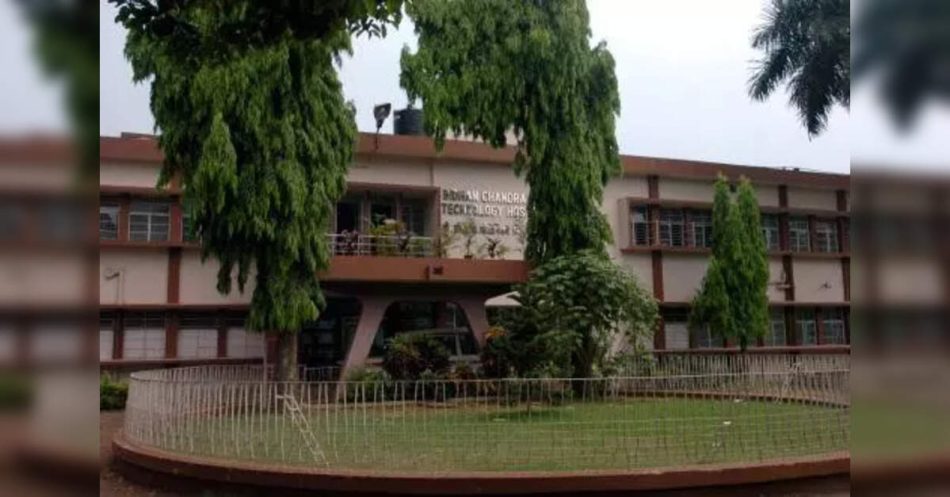
Explained: How IIT Kharagpur Solved 4.4 Billion-Year-Old Moon Secrets Unlocking Key Clues for India’s Next Lunar Mission
The Indian Institute of Technology (IIT) Kharagpur has made a groundbreaking discovery that sheds light on the formation of ancient lunar rocks, which could significantly influence India’s upcoming lunar mission, Chandrayaan-4. This research, conducted in collaboration with the Physical Research Laboratory, has unveiled critical insights into the Moon’s geological history, particularly regarding the formation of ilmenite-bearing cumulates (IBC).
Understanding the Moon’s Ancient Rocks
The focus of the research was on ilmenite-bearing cumulates, which are rare rocks rich in iron and titanium. These rocks are estimated to be between 4.3 and 4.4 billion years old, making them some of the oldest materials found on the Moon. The formation of these rocks is believed to have occurred during a period when the Moon was covered by a global magma ocean. As this molten layer cooled, heavier minerals sank, preserving vital clues about the Moon’s early geological history.
Recreating Lunar Conditions in the Laboratory
To gain a deeper understanding of these ancient rocks, the researchers conducted advanced laboratory experiments that simulated the extreme conditions of the Moon’s interior. The key parameters included:
- Pressure: Up to 3 gigapascals
- Temperature: Above 1500°C
These conditions allowed scientists to observe how the rocks melted and interacted with the lunar mantle, leading to the production of titanium-rich basaltic magma, similar to what has been observed on the Moon’s surface.
Key Scientific Findings
The IIT Kharagpur research yielded several important findings that enhance our understanding of lunar geology:
1. Dual Magma Formation Process
The researchers discovered that:
- High temperatures result in moderate titanium magma.
- Lower temperatures yield very high titanium magma.
This dual process explains the variety of titanium-rich rocks found on the lunar surface.
2. Dynamic Interior of the Moon
Contrary to previous beliefs that the Moon’s interior was largely static, this research indicates that:
- Magma can rise to the surface.
- Some magma can sink back into the mantle.
This process, known as mantle overturn, suggests that the Moon’s interior is dynamic and continues to evolve.
3. Solving Long-Standing Mysteries
The findings also provide explanations for the formation of high-titanium basalts observed in earlier lunar missions, such as the Apollo missions.
Importance for Chandrayaan-4 Mission
The implications of this research are significant for India’s future lunar missions, particularly the Chandrayaan-4 mission, which aims to bring lunar samples back to Earth. The findings will assist in:
Better Landing Site Selection
With the ability to identify regions rich in valuable titanium rocks using orbital data, scientists can select optimal landing sites for the mission.
Smarter Sample Collection
The mission can target areas containing IBC-derived materials, which are crucial for understanding the Moon’s formation and history.
Improved Data Interpretation
The research connects surface observations with deeper lunar processes, enhancing the accuracy of data analysis.
Strengthening India’s Space Program
India’s lunar exploration efforts have been rapidly advancing:
- Chandrayaan-1: Discovered water on the Moon.
- Chandrayaan-3: Achieved a successful landing at the Moon’s south pole.
- Chandrayaan-4: Aims to bring lunar samples back to Earth.
This research from IIT Kharagpur enhances India’s capacity to select the best sites for exploration and maximize the scientific value of lunar samples.
Global Significance of the Discovery
The breakthrough aligns with a global surge in lunar exploration, including NASA’s Artemis program, China’s Chang’e missions, and various private lunar initiatives. India’s contribution stands out due to its robust combination of laboratory research and strategic space mission planning.
Conclusion
As India prepares for its Chandrayaan-4 mission, the work done by IIT Kharagpur not only enriches our understanding of the Moon’s ancient geological processes but also positions India as a key player in the ongoing global exploration of lunar science.
Note: The information presented in this article is based on research and developments as of March 2026.