17th ISBA Conference Concludes at IIT Guwahati
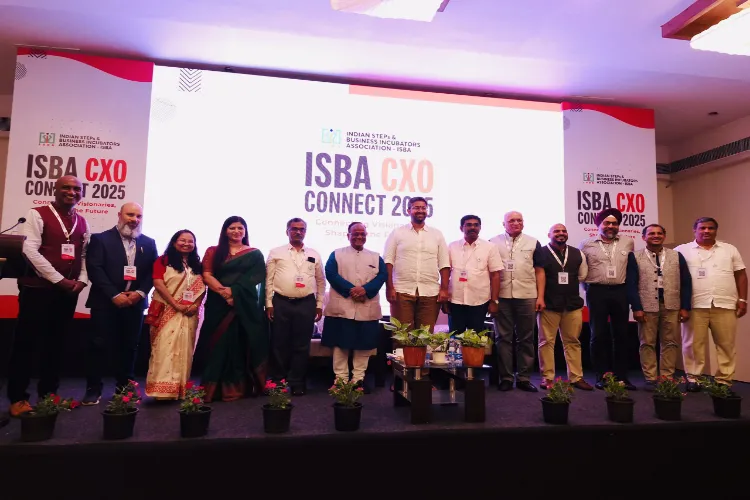
Guwahati, Assam – The Indian Institute of Technology (IIT) Guwahati recently hosted the 17th Indian STEPs & Business Incubators Association Conference (ISBACON 2025) from December 10th to 12th, 2025. This significant event marked the first time the conference was held in Northeast India, under the theme “Enabling the Enablers for a Viksit Bharat.”
Inaugural Ceremony
The inaugural event was honored by the presence of Ashok Puranik, Director of AIIMS Guwahati, who served as the Chief Guest. Rajesh Thakur, Administrator of Guwahati Biotech Park, was also a distinguished guest. The event was presented by Prof. Devendra Jalihal, Director of IIT Guwahati.
Significance of ISBACON 2025
Prasad Menon, President of the Indian STEPs & Business Incubators Association (ISBA), expressed his enthusiasm for hosting ISBACON 2025 at IIT Guwahati. He stated, “For all of us from the Enabler community of the startup ecosystem, the annual gathering is the most awaited event of the year. This year we celebrate 20 years of ISBA, and we are thrilled that this conference is going to be held in the North East for the very first time.”
Participation and Engagement
The three-day conference attracted over 200 participants and more than 300 delegates from various sectors, including industry and academia. This made ISBACON 2025 the largest annual startup incubation ecosystem event in India. The conference featured insights from leaders of prominent incubation centers, institutional investors, apex government officials, policymakers, and industry veterans, all emphasizing the critical role of incubation centers in fostering India’s innovation-led startup ecosystem.
Conference Highlights
ISBACON 2025 hosted a total of 20 sessions, which included:
- Panel discussions on ISBA@20
- Local to Global: Strengthening International Linkages for Incubation & Acceleration
- Building Growth Partnerships for Incubators and Startups
- Building Tier II & III Incubation Eco-system for DeepTech
- Converging Perspectives: Shaping India’s Multi-Sectored Approach
One of the major highlights was a roundtable discussion titled “Vision for Deep Tech Innovation and Incubation in the times of Viksit Bharat.” This session provided participants with in-depth insights into policy requirements, infrastructure needs, and collaborative efforts essential for accelerating deep-tech innovation in the country.
Expert Contributions
The conference featured 37 distinguished speakers, including members of the ISBA Advisory Board. They engaged in discussions on actionable strategies across critical domains, such as:
- Incubation excellence
- Emerging technologies
- Sophisticated funding mechanisms
- Social impact
- A Blueprint for building resilient and future-ready institutions
Support and Collaboration
Swapnil Sinha, CEO of IIT Guwahati BioNEST, expressed his excitement about hosting ISBACON 2025, stating, “IIT Guwahati BioNEST is thrilled to host the Northeast India’s first ISBACON 2025. I am confident the two-day event will provide a launchpad to all the enablers of Northeast.”
The conference received support from leading financial institutions, including IDFC First Bank and HDFC Parivarthan, as well as key government supporters such as the Department of Science and Technology (DST), the Ministry of Electronics & Information Technology (MeitY), and BIRAC. ISBACON 2025 served as a catalyst to strengthen national foundation requirements for India by offering a platform for capacity building, policy integration, and cross-regional collaborations for innovation and entrepreneurship.
Conclusion
The 17th ISBA Conference at IIT Guwahati was a landmark event that successfully brought together various stakeholders in the startup ecosystem. It not only celebrated two decades of ISBA but also marked a significant step toward enhancing the startup landscape in Northeast India. The collaborative efforts and discussions held during the conference are expected to pave the way for future innovations and entrepreneurial success in the region.
Note: The information presented in this article is based on the events and discussions that took place during the 17th ISBA Conference at IIT Guwahati.