SMPA & IIT (ISM) Dhanbad Join Forces for Greener Future
Kolkata, December 11, 2025 – In a significant development aimed at promoting sustainability in India’s maritime sector, the Syama Prasad Mookerjee Port (SMPA), Kolkata, has announced a partnership with the Indian Institute of Technology (Indian School of Mines) Dhanbad (IIT (ISM) Dhanbad). This collaboration is set to pave the way for a greener future through the development of a Green Hydrogen ecosystem at the Kolkata Dock System and the Haldia Dock Complex.
Objectives of the Collaboration
The primary objective of this partnership is to explore and implement innovative solutions that will contribute to the establishment of a sustainable maritime environment. The focus on Green Hydrogen is particularly significant, as it represents a clean energy alternative that can help reduce carbon emissions in the shipping and logistics sectors.
Key Players in the Partnership
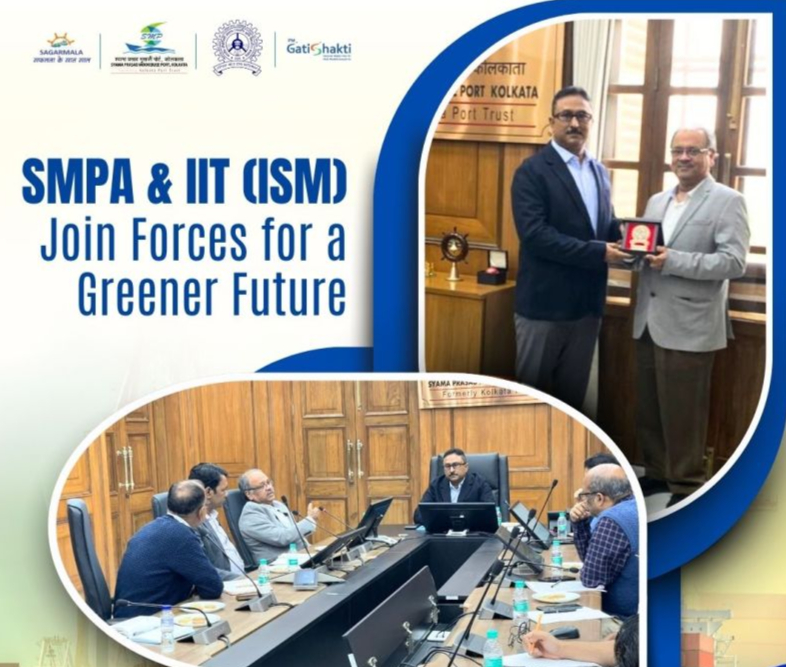
The partnership was formalized during a consultative meeting between two key figures:
- Shri Rathendra Raman – Chairperson, SMP Kolkata
- Prof. Sukumar Mishra – Director, IIT (ISM) Dhanbad
Both leaders emphasized the importance of combining SMP Kolkata’s maritime expertise with IIT (ISM) Dhanbad’s academic and research excellence to drive sustainable innovation.
Significance of Green Hydrogen
Green Hydrogen is produced using renewable energy sources, making it a sustainable alternative to fossil fuels. The maritime sector is one of the largest contributors to greenhouse gas emissions, and transitioning to cleaner energy sources is crucial for mitigating climate change. The collaboration between SMPA and IIT (ISM) Dhanbad aims to:
- Develop infrastructure for Green Hydrogen production and distribution.
- Conduct research on the feasibility of using Green Hydrogen in shipping operations.
- Promote awareness and education regarding sustainable practices in maritime logistics.
Potential Impact on India’s Maritime Sector
This partnership is expected to have a profound impact on India’s maritime sector, particularly in the following areas:
1. Environmental Sustainability
By focusing on Green Hydrogen, the collaboration aims to significantly reduce the carbon footprint of maritime operations in India. This aligns with global efforts to combat climate change and adhere to international environmental standards.
2. Economic Growth
The development of a Green Hydrogen ecosystem could create new job opportunities in research, production, and logistics. Additionally, it may attract investments in clean energy technologies, contributing to economic growth.
3. Technological Innovation
The partnership will facilitate research and development initiatives that could lead to technological advancements in the maritime sector. Innovations in clean energy technologies are essential for enhancing operational efficiency and reducing costs.
Future Directions
The SMPA and IIT (ISM) Dhanbad collaboration is just the beginning of a larger movement towards sustainability in the maritime industry. Future initiatives may include:
- Establishing pilot projects for Green Hydrogen utilization in shipping.
- Collaborating with other ports and institutions to share knowledge and best practices.
- Engaging with policymakers to develop supportive regulations for clean energy adoption in maritime operations.
Conclusion
The partnership between Syama Prasad Mookerjee Port and IIT (ISM) Dhanbad represents a significant step towards a sustainable future for India’s maritime sector. By focusing on the development of a Green Hydrogen ecosystem, both institutions are committed to driving innovation and promoting environmentally friendly practices in shipping and logistics.
Note: This article is based on the latest developments as of December 2025 and aims to provide insights into the ongoing efforts towards sustainability in the maritime industry.