Delhi Metro Signs MoU with IIT Hyderabad’s TiHAN for Next-Gen Autonomous Navigation Solutions
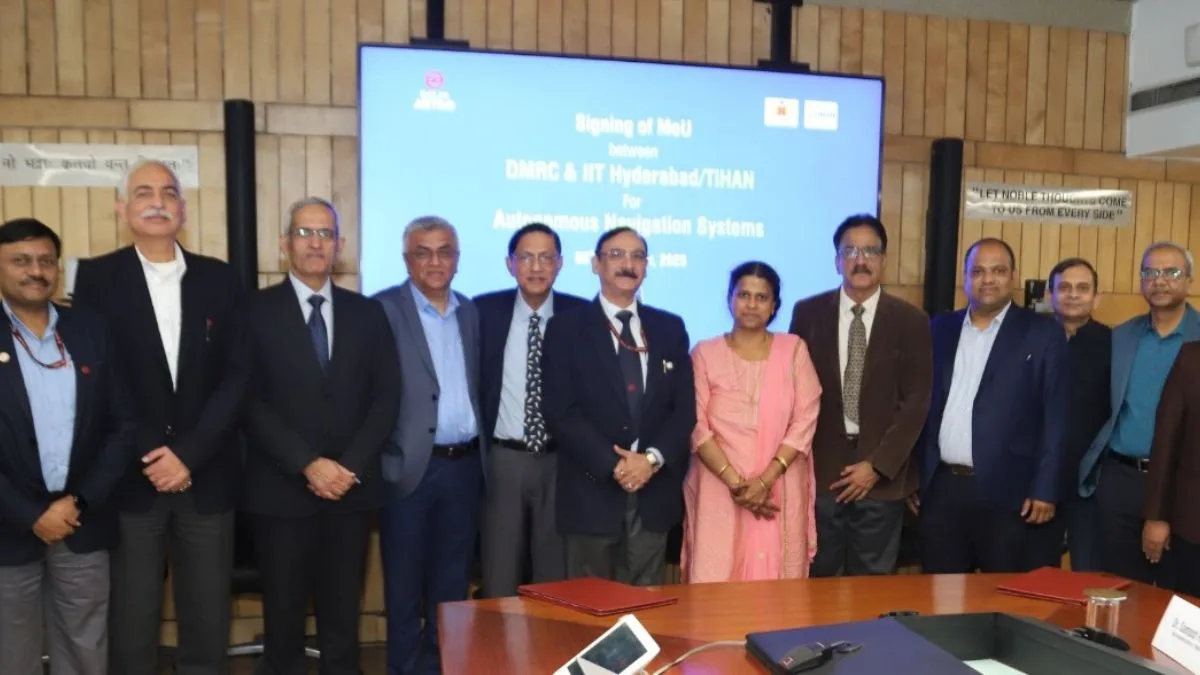
On December 8, 2025, the Delhi Metro Rail Corporation (DMRC) took a significant step towards enhancing public transportation by signing a Memorandum of Understanding (MoU) with the Technology Innovation Hub for Autonomous Navigation (TiHAN) at IIT Hyderabad. This collaboration aims to develop next-generation autonomous navigation solutions that will improve last-mile connectivity in major metropolitan areas and public transit systems in Tier II and III cities.
Overview of the MoU
The MoU was signed by Shobhan Chaudhuri, Advisor for Research and Development at DMRC, and Dr. Santosh Reddy, Hub Executive Officer of TiHAN. The signing ceremony was attended by key officials from both organizations, including Dr. Vikas Kumar, Managing Director of DMRC, and various directors from DMRC, as well as esteemed professors from IIT Hyderabad.
Objectives of the Collaboration
The primary objective of this collaboration is to leverage the strengths and expertise of both DMRC and TiHAN in implementing autonomous navigation technologies. According to a spokesperson from DMRC, the initiative is focused on creating a “Safe Smart and Next Gen Mobility solution” that will address the challenges of urban transportation.
Key Goals of the MoU
- Development of autonomous navigation systems for ground vehicles and drones.
- Enhancement of last-mile connectivity in urban areas.
- Improvement of public transit systems in smaller cities.
- Integration of advanced data acquisition systems for efficient navigation.
About TiHAN
TiHAN, established by the Department of Science & Technology (DST) under the National Mission in Cyber Physical Systems, is dedicated to the development of autonomous navigation and data acquisition systems. These systems enable various autonomous platforms, including ground vehicles, robots, and unmanned aerial vehicles (UAVs), to navigate and collect data without human intervention.
Technological Innovations
The collaboration between DMRC and TiHAN is expected to lead to several technological innovations in the field of autonomous navigation. Some anticipated advancements include:
- Improved algorithms for real-time navigation and obstacle avoidance.
- Integration of artificial intelligence for enhanced decision-making capabilities.
- Development of robust communication systems for seamless data transfer.
- Implementation of safety protocols to ensure the reliability of autonomous systems.
Implications for Urban Mobility
The implications of this MoU extend beyond just technological advancements. By focusing on last-mile connectivity, the collaboration aims to address several urban mobility challenges:
- Traffic Congestion: Autonomous navigation solutions can help optimize routes, reducing traffic congestion in urban areas.
- Environmental Impact: By promoting the use of autonomous electric vehicles, the initiative aims to reduce carbon emissions and enhance sustainability.
- Accessibility: Improved public transit options will enhance accessibility for residents in Tier II and III cities, making transportation more inclusive.
Future Prospects
The partnership between DMRC and TiHAN is expected to pave the way for further research and development in autonomous navigation technologies. As cities continue to grow and evolve, the need for efficient and sustainable transportation solutions becomes increasingly critical. This collaboration is a step towards a future where autonomous vehicles play a significant role in urban mobility.
Potential Challenges
While the prospects of this collaboration are promising, several challenges must be addressed:
- Regulatory Framework: Establishing a regulatory framework for autonomous vehicles is essential to ensure safety and compliance.
- Public Acceptance: Gaining public trust in autonomous systems will be crucial for widespread adoption.
- Infrastructure Development: Upgrading existing infrastructure to support autonomous navigation technologies will require significant investment.
Conclusion
The signing of the MoU between Delhi Metro and IIT Hyderabad’s TiHAN marks a significant milestone in the journey towards smarter urban mobility solutions. By focusing on autonomous navigation, this collaboration aims to enhance public transportation, improve last-mile connectivity, and contribute to sustainable urban development. As the project progresses, it will be essential to monitor its impact on urban mobility and address any challenges that arise.
Note: The information presented in this article is based on the latest available data as of October 2023 and may be subject to change as developments occur in the field of autonomous navigation and urban mobility.