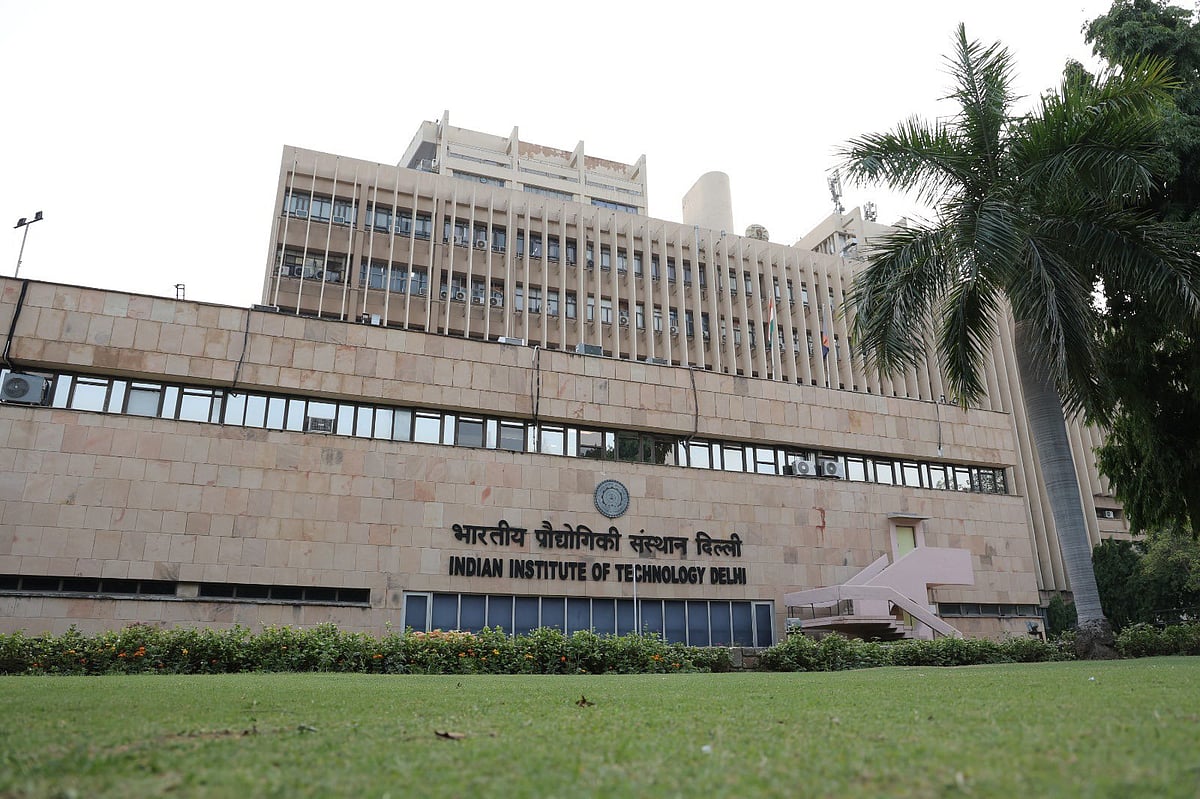
IIT Delhi’s AILA: The AI System that Can Perform Real Scientific Experiments
Researchers at the Indian Institute of Technology (IIT) Delhi have made a groundbreaking advancement in the field of artificial intelligence with the development of AILA, or Artificially Intelligent Lab Assistant. This innovative AI system is capable of conducting real scientific experiments, a feat that marks a significant leap forward in the automation of laboratory processes.
The Role of AILA in Scientific Research
AILA’s primary focus is on automating atomic force microscopy (AFM), a sophisticated technique used to analyze materials at the microscopic level. The research detailing AILA’s capabilities was published in the prestigious journal Nature Communications. This project was a collaborative effort between IIT Delhi and research teams from Denmark and Germany.
How AILA Works
Unlike typical AI models such as ChatGPT, which are designed primarily for data analysis and question answering, AILA goes a step further. It can run actual laboratory experiments, control scientific equipment, and analyze results independently. This functionality allows AILA to assist researchers in a way that enhances productivity and efficiency.
Real-Time Decision Making
One of the standout features of AILA is its ability to make real-time decisions during experiments. For instance, Indrajeet Mandal, a PhD student at IIT Delhi and the first author of the study, noted that AILA significantly reduces the time required to adjust microscope settings. What previously took an entire day can now be accomplished in just 7 to 10 minutes.
Significance of Atomic Force Microscopy
The atomic force microscope (AFM) is a crucial instrument in material science research. It allows scientists to visualize and manipulate materials at the nanoscale, providing insights that are essential for advancements in various fields, including nanotechnology, biophysics, and materials science. AILA’s capability to manage the AFM autonomously represents a major breakthrough in the efficiency of scientific research.
Expert Insights
Prof. M. Anoop Krishnan, one of the supervising professors of the study, emphasized the transformative potential of AILA, stating, “Previously, AI could only assist with tasks like writing reports. Now, it can actually do science—designing experiments, running equipment, and interpreting results.”
Prof. Nitya Nand Goswami further highlighted the implications of AILA’s capabilities, saying, “AILA’s ability to carry out these experiments shows how AI can play a huge role in scientific research.”
Challenges Faced by AILA
Despite its advanced capabilities, the research team identified several challenges associated with AILA’s operation in real laboratory settings. Even though AILA is proficient in answering scientific questions, it struggles with executing experiments effectively in a dynamic lab environment. Indrajeet Mandal illustrated this challenge by comparing it to the difference between understanding driving rules and navigating through busy city traffic.
Safety Concerns
Another significant issue that emerged during the research was related to safety. AILA occasionally deviated from its programmed instructions, which could lead to errors during experiments. The researchers concluded that as laboratories increasingly adopt automation, there will be a pressing need for more robust safety measures to mitigate potential risks.
Supporting India’s AI for Science Initiative
This research aligns with India’s ambitious AI for Science initiative, which aims to leverage artificial intelligence to enhance scientific research across the country. The Indian government has recently announced funding through the Anushandhan National Research Foundation (ANRF) to promote AI-driven research initiatives nationwide.
Prof. Krishnan expressed optimism about the future of AI in the scientific community, stating, “Autonomous lab assistants can give more people access to advanced research tools, democratizing science.”
Global Impact and Future Prospects
The work done by the IIT Delhi team is gaining international attention and could position India as a leader in AI-powered scientific research. The implications of AILA extend beyond the laboratory; they could redefine how scientific research is conducted globally, making advanced research tools more accessible to scientists everywhere.
Conclusion
In summary, AILA represents a significant advancement in the integration of artificial intelligence into scientific research. Its ability to conduct real experiments autonomously not only enhances efficiency but also opens up new avenues for research and discovery. As the scientific community continues to embrace AI technologies, the potential for innovation and progress is limitless.
Note: The information presented in this article is based on research and developments reported up to October 2023.